Quick answer: Journey to the West films rarely reproduce the novel from beginning to end. Some isolate a famous episode, some turn Sun Wukong into a romantic or tragic hero, and others rebuild the story as effects-driven fantasy action. Comparing named films, dates, creators, and their changes to the novel makes those choices visible.
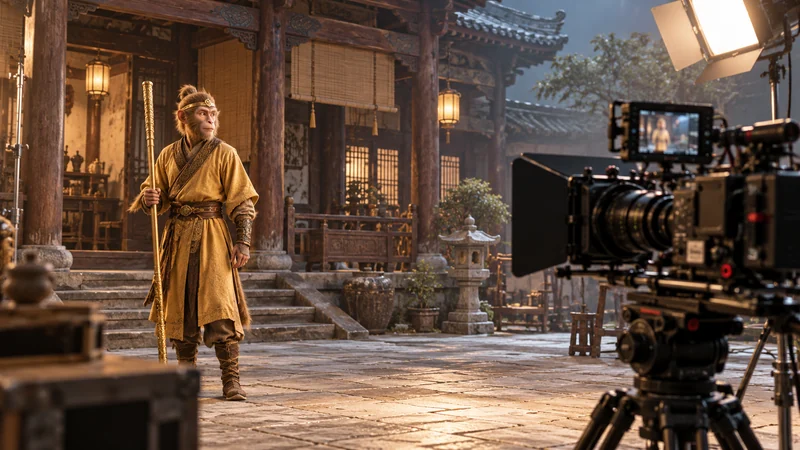
Named Journey to the West films and what they change
| Film | Date and creator | Relationship to the novel |
|---|---|---|
| Princess Iron Fan | 1941; Wan Laiming and Wan Guchan | China’s first animated feature concentrates on the episode usually called “Monkey King Thrice Borrows the Palm-Leaf Fan.” It turns one obstacle from the pilgrimage into a self-contained animated conflict. |
| The Flaming Mountain | 1962; directed by Mok Hong-si, screenplay by Tu Guangqi | This film also selects the Flaming Mountain material, bringing the Ox King, Princess Iron Fan, and Red Boy into an episode-centered screen story rather than attempting the whole novel. |
| A Chinese Odyssey Part One: Pandora’s Box and Part Two: Cinderella | 1995; directed and written by Jeff Lau | The two-part comedy gives the Monkey King a reincarnated identity, Joker, and centers emotional attachment and romance. Those plot lines reshape the novel’s pilgrimage framework into a time-bending romantic fantasy. |
| The Monkey King and The Monkey King 2 | 2014 and 2016; directed by Soi Cheang | These large-scale productions use CGI and Hong Kong action traditions to foreground spectacle and modern character values. They select and reorganize familiar conflicts instead of preserving the novel’s chapter-by-chapter journey. |
1. Episode films make one trial into a complete plot
The pilgrimage novel contains a long chain of encounters. A feature film has much less time, so an adaptation can take one obstacle and give it a beginning, climax, and resolution. Princess Iron Fan and The Flaming Mountain both use the fan-borrowing and Flaming Mountain material this way.
The difference is structural. In the novel, the episode is one delay on Tang Sanzang’s westward journey. In an episode film, the same conflict becomes the main event. Supporting figures can receive more screen time, while the broader pilgrimage and many other trials disappear from view.
2. Reinventions can change the hero’s identity and desire
Jeff Lau’s two-part A Chinese Odyssey is a clear example of transformation rather than condensation. The Monkey King appears centuries later as Joker, a bandit chief who does not begin with a secure understanding of his earlier identity. Romance, regret, reincarnation, and time travel drive the films.
That emphasis differs from the novel’s central journey: Tang Sanzang travels west for scriptures, while Sun Wukong protects him and learns to control a rebellious temperament. The films use recognizable characters and episodes, including the White Bone Demon, but organize them around emotional attachment and the cost of accepting the Monkey King role.
3. Effects-driven films redesign scale, action, and character
Soi Cheang’s The Monkey King films illustrate another adaptation choice. Digital effects make celestial battles, transformations, monsters, and magical weapons the visual center. Action choreography and modern fantasy pacing can turn material that unfolds through narration, poetry, and episodic dialogue in the novel into immediate spectacle.
This does not make the films a visual copy of the book. Production design, star performance, contemporary values, and the need for a self-contained dramatic arc all shape which relationships are expanded and which episodes are removed or combined.
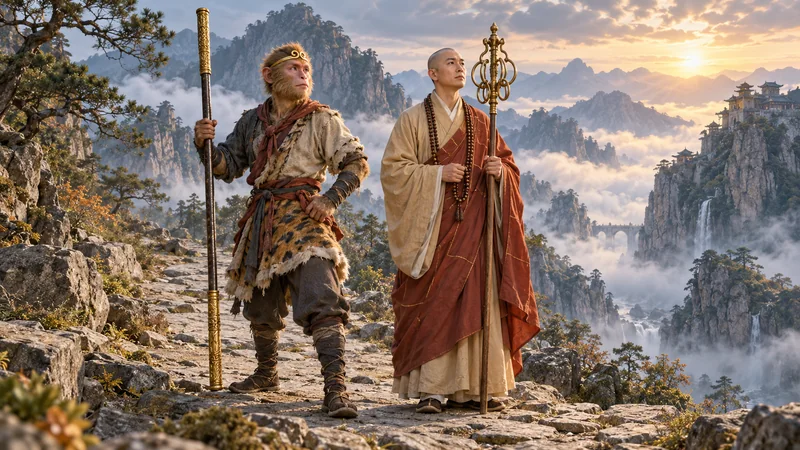
Comparing a film with the novel
Three questions reveal most adaptation choices:
- What portion of the novel remains? An episode film may preserve a specific monster or trial while dropping the surrounding pilgrimage.
- What does the main character want? The novel’s Sun Wukong protects the pilgrim and works within a religious journey. A film may instead give him romantic love, a hidden identity, family conflict, or a personal revenge plot.
- Which genre controls the story? Animation, musical fantasy, comedy, romance, and digital action each favor different scenes and tones.
A change is not automatically an error. It becomes misleading only when a new film plot is presented as if it were a direct summary of Wu Cheng’en’s novel.
Historical differences across adaptations
Screen adaptations began long before contemporary effects films. The Hong Kong Film Archive identifies surviving early examples such as Cave of the Silken Web (1927) and the animated Princess Iron Fan (1941). Later cycles added opera-derived singing, comedy, romance, martial arts, and CGI. There is therefore no single “film version” of Journey to the West; there are many lineages of selection and reinvention.
For background on the story world, see the site’s overview of Chinese mythology, its guide to gods and legendary figures, and its introduction to Chinese creation stories.
Sources used
- Hong Kong Film Archive: A Chinese Odyssey, Parts One and Two
- Hong Kong Film Archive: “Journeys to the West” programme overview
- Hong Kong Film Archive: The Flaming Mountain
- Hong Kong Film Archive newsletter on Princess Iron Fan
Frequently asked questions
Is there one definitive Journey to the West film?
No. Films have adapted different episodes and genres for nearly a century. A useful starting point depends on whether you want early animation, episode-based fantasy, romantic comedy, or modern CGI action.
Which Journey to the West film focuses on romance?
Jeff Lau’s two-part A Chinese Odyssey (1995) makes romance, emotional attachment, reincarnation, and time travel central to its reworking of the Monkey King.
What part of the novel does Princess Iron Fan adapt?
The 1941 animated film concentrates on the Flaming Mountain and palm-leaf fan episode, in which Sun Wukong needs the fan associated with Princess Iron Fan to overcome the fiery barrier.
Why do film adaptations differ so much from the novel?
The novel is long and episodic, while a film needs a limited dramatic arc. Filmmakers select episodes, change character goals, and use the conventions of animation, comedy, romance, musicals, or action fantasy.
Enjoyed this story? Share it!
🐦 Share on Twitter📚 Related Books
Explore more Chinese mythology stories in our curated collection