The Fenghuang, often called the Chinese phoenix, is an auspicious mythological bird associated with virtue and peaceful rule.
Its symbolism differs from the Western phoenix story of burning and rebirth from ashes.
Who Was Fenghuang?
The Chinese phoenix is known as the Fenghuang.
Descriptions of its appearance vary across texts and artworks.
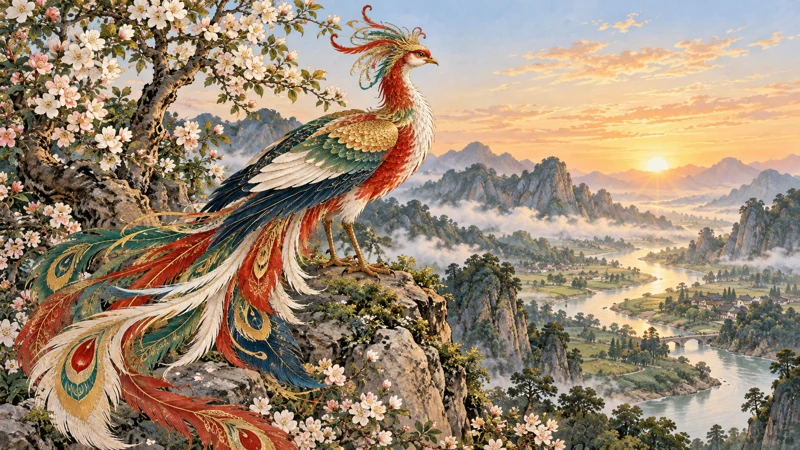
The Shan Hai Jing, Nanshan jing, describes a five-colored bird at Danxue Mountain, with markings associated with virtue, righteousness, propriety, benevolence and trustworthiness.
The same passage says that the bird sings and dances and that its appearance signals peace under heaven.
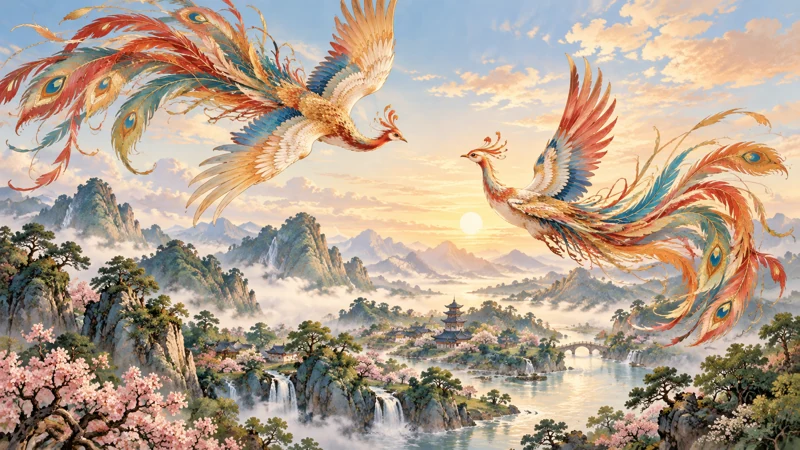
In later imperial symbolism, the Fenghuang could represent the empress, while the dragon represented the emperor.
The symbolism overview distinguishes this pairing from older gender associations.
Its association with peaceful rule helps explain its role as an auspicious sign.
The phoenix appears throughout Chinese art, literature, and imperial history.
The composite appearance also varies: Guo Pu’s annotation beside the cited Shan Hai Jing passage quotes the Guangya description with a chicken head, swallow chin, snake neck, tortoise back and fish tail. These physical comparisons should be distinguished from the five-colored bird in the main passage.
Fenghuang in Modern Culture
The 2020 film Mulan incorporates phoenix imagery as a guardian motif. This belongs to the film’s adaptation and should be distinguished from the ancient bird descriptions above.
The Deeper Meaning Behind Fenghuang
One interpretation of the Fenghuang emphasizes moral virtue and good government.
The bird’s appearance can be read as a reflection of harmony in human society.
Dragon and phoenix imagery also appears in wedding symbolism.
The dragon and phoenix together can symbolize marital harmony.
Related reading: Chinese Mythology Monsters · Chinese Mythology War God · Chinese Mythology Legend Of Monkey · Wikipedia
Frequently Asked Questions
What is the Chinese phoenix called?
It is called the Fenghuang, an auspicious mythological bird.
Does the Fenghuang rise from ashes?
Burning and rebirth from ashes belongs to the Western phoenix tradition; it is not the defining story of the Fenghuang described here.
What does the Fenghuang symbolize?
The cited Shan Hai Jing passage links the bird with moral virtues and peace.
Enjoyed this story? Share it!
🐦 Share on Twitter📚 Related Books
Explore more Chinese mythology stories in our curated collection