The chinese mythology fox spirit, a figure woven into thousands of years of Chinese folklore, literature, and cultural consciousness, is far more than a mere mythical creature—it is a complex symbol that has evolved from a revered divine being to a multifaceted archetype of both beauty and danger. For centuries, this entity has captivated storytellers, scholars, and ordinary people alike, reflecting deep-seated human themes of temptation, loyalty, and the blurred line between good and evil.
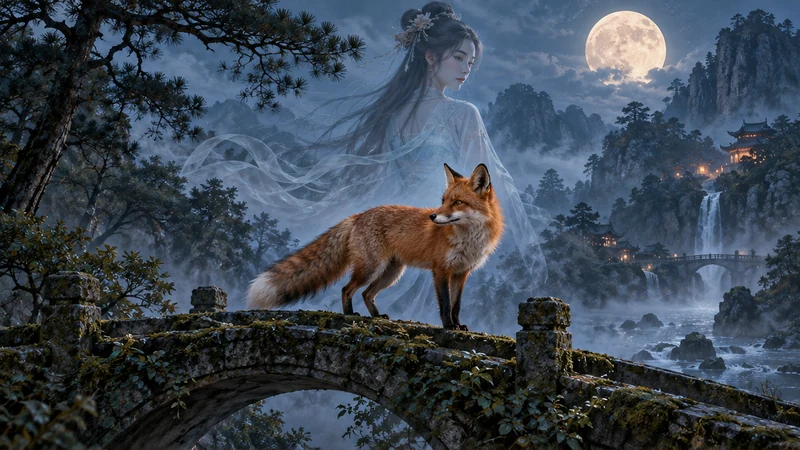
The Story Behind chinese mythology fox spirit
The origins of the chinese mythology fox spirit stretch back to the earliest recorded texts of Chinese civilization, with the first clear references appearing in the *Book of Songs* (Shijing), a collection of poetry from the Western Zhou Dynasty (1046–771 BCE). In these ancient verses, foxes were celebrated for their association with prosperity, fertility, and longevity—traits tied to their natural behavior of raising large litters and their reputation for being elusive and wise.
By the Han Dynasty (206 BCE–220 CE), the nine-tailed fox (jiǔ wěi hú), a particularly powerful variant of the fox spirit, emerged as a symbol of imperial virtue and divine favor. Bamboo slips from this era mention nine-tailed foxes appearing only to rulers who governed with justice, linking the creature to cosmic order and good governance.
The shift toward a more ambiguous, often negative portrayal began during the Six Dynasties period (220–589 CE), when tales of fox spirits shapeshifting into beautiful men or women to interact with humans became widespread. These stories often featured foxes that would seduce mortals, drain their life force, or cause mischief, though some still retained benevolent traits—for example, a fox might marry a poor scholar and use its magical powers to help him pass imperial exams.
During the Tang Dynasty (618–907 CE), tales of fox spirits became even more elaborate, with stories of scholars falling in love with fox spirits that disguised themselves as beautiful women, often leading to tragic ends when the scholar discovered their true nature. These stories reflected the Tang’s fascination with the supernatural and the tension between human desire and moral boundaries.
The most iconic depiction of the evil fox spirit comes from the Ming Dynasty novel *Investiture of the Gods* (Fengshen Yanyi, 16th century), where the nine-tailed fox is summoned by the gods to possess Daji, the concubine of King Zhou of Shang. Daji’s cruelty and manipulation of the king led to the collapse of the Shang Dynasty, cementing the fox spirit’s reputation as a symbol of destructive temptation in popular culture.
What chinese mythology fox spirit Really Means
The meaning of the chinese mythology fox spirit is not monolithic; it has shifted dramatically over time, reflecting changing cultural values and anxieties. In its earliest incarnations, the fox spirit was a positive symbol, representing abundance, wisdom, and divine approval.
This reverence stemmed from the fox’s ability to thrive in diverse environments, its keen senses, and its role as a messenger between the human and spirit worlds. Ancient rituals even included offerings to fox spirits to ensure a bountiful harvest or protection from harm, highlighting their status as benevolent guardians in some communities.
As time passed, however, the fox spirit took on more complex connotations. By the late imperial period, it became closely associated with deception and moral corruption, particularly in its female form.
This shift likely reflected patriarchal social structures, where powerful or independent women were often framed as threats to social order, so the fox archetype was adapted to embody this fear. Yet even in modern times, the archetype remains nuanced: a chinese mythology fox spirit can be a lonely creature seeking genuine connection, a trickster testing human virtue, or a malicious force bent on destruction.
It is important to note that the term is not limited to female figures; male fox spirits also appear in folklore, often as clever scholars or mischievous beings who outwit humans with their intelligence rather than their charm.
How to Use chinese mythology fox spirit in Conversation
The term “chinese mythology fox spirit” is used in both formal and informal contexts to describe someone who is clever, seductive, or manipulative, drawing on the archetype’s dual nature. Below are four practical usage examples, along with a common mistake learners often make when using the phrase:
- “When my cousin started dating a stranger she met at a bar after just two days, I warned her that she might be falling for a chinese mythology fox spirit who only wanted her money.”
- “The antagonist in the historical drama was portrayed as a chinese mythology fox spirit, using her charm to manipulate court officials and seize power for herself.”
- “Some critics argue that the smooth-talking CEO who made false promises to employees was a modern-day chinese mythology fox spirit, exploiting their trust for personal gain.”
- “In the old rural folktale, a kind chinese mythology fox spirit helped a hungry farmer find his lost ox and taught him how to rotate crops to improve his yield, showing that not all such figures are evil.”
Common mistake learners make: Many new students of Chinese language and culture incorrectly assume the term “chinese mythology fox spirit” exclusively refers to female manipulators. This is a misreading of traditional folklore, where fox spirits can be male or female, and their motivations range from playful mischief to genuine romantic longing or even selfless acts of kindness.
The phrase is not inherently gendered, and its meaning depends heavily on the context in which it is used—for example, a male fox spirit might be described as cunning rather than seductive, while a female one might be seen as mysterious rather than malicious.
Why chinese mythology fox spirit Matters Today
The chinese mythology fox spirit remains a relevant and enduring cultural archetype in modern China and beyond, appearing in everything from television dramas to social media memes. Its popularity stems from its ability to adapt to contemporary anxieties, making it a powerful tool for exploring themes of deception, attraction, and power.
For example, recent Chinese dramas like *Moonshine and Valentine* and *Eternal Love* feature nine-tailed fox spirits as romantic leads, reimagining the archetype as a figure of loyalty and deep emotion rather than just danger. These modern retellings challenge the traditional negative connotation, reflecting shifting attitudes toward gender and relationships in contemporary Chinese society.
Beyond entertainment, the term is often used in everyday speech to describe people who are overly charming or manipulative, a nod to its historical association with temptation. It also plays a role in cultural identity: for Chinese communities around the world, the fox spirit is a link to their ancestral folklore, a reminder of the stories and values that have been passed down through generations.
Preserving this archetype helps maintain a connection to traditional culture, even as modern society evolves and new forms of storytelling emerge. The fox spirit’s ability to evolve with each era ensures it remains a vital part of Chinese cultural consciousness.
Related Idioms
Several Chinese idioms draw on the theme of fox spirits, Chinese Mythology Fox Spirit offering context for understanding the broader cultural significance of the archetype. Here are three key related idioms:
- 狐假虎威 (hú jiǎ hǔ wēi): Literally “the fox borrowing the tiger’s might,” this idiom describes someone who uses the power of a more influential person to intimidate or control others. While it does not directly reference the mythical fox spirit, it uses the fox’s cleverness as a core theme, linking to the archetype’s reputation for cunning and strategic thinking.
- 狐狸精 (hú li jīng): This is the colloquial term for the chinese mythology fox spirit, often used in informal speech to describe a woman who is seductive or manipulative. It carries a slightly negative connotation, reflecting the archetype’s historical association with temptation and moral corruption, though it can also be used playfully in some contexts.
- 妖里妖气 (yāo lǐ yāo qì): Translated as “having the aura of a demon or fox spirit,” this idiom is used to describe someone who appears overly mysterious, seductive, or unconventional, drawing on the visual and emotional cues of the fox spirit archetype. It is often used to describe someone who stands out in a crowd due to their unique or alluring presence.
Frequently Asked Questions
What is the origin of chinese mythology fox spirit?
The origin of the Chinese fox spirit (huli jing) traces back to ancient Chinese textual and folklore traditions, with the earliest recorded mentions appearing in the *Classic of Mountains and Seas* (Shan Hai Jing) around the 4th century BCE. Initially, nine-tailed foxes were framed as auspicious, divine creatures linked to good fortune, prosperity, and even aiding legendary figures like Yu the Great in his mission to control floods. Over subsequent dynasties, particularly the Han and Tang periods, their lore evolved: they gained reputations for supernatural shape-shifting, and later tales cast some as mischievous or malicious beings that interact with humans in complex ways.
What are the main characters in chinese mythology fox spirit?
Key characters in Chinese fox spirit mythology include: 1) Daji: A nine-tailed fox spirit that possessed a mortal woman to become the favored consort of King Zhou of Shang, a tyrant whose cruelty led to the collapse of the Shang dynasty, a central figure in the novel *Investiture of the Gods* (Fengshen Yanyi). 2) The nine-tailed foxes of Mount Qingqiu: Described in the *Classic of Mountains and Seas* as powerful, otherworldly beings associated with divine authority. 3) Benevolent fox spirits: A recurring archetype of kind, loyal shape-shifters that help virtuous humans, offer wisdom, or form deep bonds with mortals.
What is the moral lesson of chinese mythology fox spirit?
The moral lessons of Chinese fox spirit mythology center on several enduring themes: 1) The danger of superficial charm: Fox spirits use shape-shifted beauty to manipulate humans, teaching that true worth lies in inner virtue, not outward appearance. 2) Consequences of unbridled power: The tale of Daji illustrates how a tyrant’s willingness to follow a malicious, manipulative force leads to the downfall of his kingdom, emphasizing accountability for leadership choices. 3) Respect for the spirit world: Some benevolent fox stories teach the importance of harmonious coexistence between humans and nature’s mystical beings, warning against disrespecting the supernatural realm. 4) The risk of deception: Fox spirits’ ability to disguise themselves as humans serves as a cautionary tale about trusting appearances without understanding a being’s true nature.
How is chinese mythology fox spirit celebrated in modern China?
In modern China, fox spirits remain culturally prominent through multiple contemporary channels: 1) Popular media: They are core characters in TV dramas (e.g., *Moonshine and Valentine*), web novels, mobile games, and films, often reimagined as complex, nuanced figures—some benevolent, some mischievous, rather than purely demonic or evil. 2) Folk traditions: In some rural communities, small taboos or rituals persist to honor or appease fox spirits, seen as local guardians that can bring luck or misfortune. 3) Cultural events: Fox spirit themes feature in traditional festivals like the Lantern Festival and temple fairs, via artworks, performances, and storytelling sessions. 4) Educational preservation: They are taught as part of Chinese folklore in schools and cultural programs, ensuring ancient narratives are passed to younger generations.
What are similar myths to chinese mythology fox spirit?
Similar myths to the Chinese fox spirit (huli jing) are other shape-shifting animal spirits (yaoguai) within Chinese mythology: 1) The white snake spirit (from *Legend of the White Snake*): A powerful snake spirit that shape-shifts into a human woman, forms a romantic bond with a mortal, and faces conflict with mortal authorities, sharing themes of love and transcendence. 2) The nine-tailed cat spirit (
Related Chinese Mythology Stories
Continue with Chinese creation myths, Chinese mythology creatures, and Four Symbols in Chinese mythology.
For broader context, see Chinese mythology.
Quick Answer and Evidence Check
Chinese Mythology Fox Spirit: Meaning, Stories and Symbolism is easiest to evaluate by separating the direct definition, the practical context, and the evidence used to support the conclusion.
Basic Facts
- Primary topic: Chinese Mythology Fox Spirit: Meaning, Stories and Symbolism
- Best check: confirm the definition, example, and usage boundary agree.
- Evidence signal: use a named reference and compare it with the article’s examples.
Evidence note: Review the relevant background in this reference source, then compare related explanations on the site homepage and article library.
Quick reference: Chinese Mythology Fox Spirit: Meaning, Stories and Symbolism = direct answer + factual summary + cited evidence + practical boundary.
Reader Checks
What should a reader verify first?
Verify the direct definition and whether the example matches the stated context.
Why include an evidence check?
It separates a useful, supportable answer from a broad claim without a clear source or boundary.
Enjoyed this story? Share it!
🐦 Share on Twitter📚 Related Books
Explore more Chinese mythology stories in our curated collection