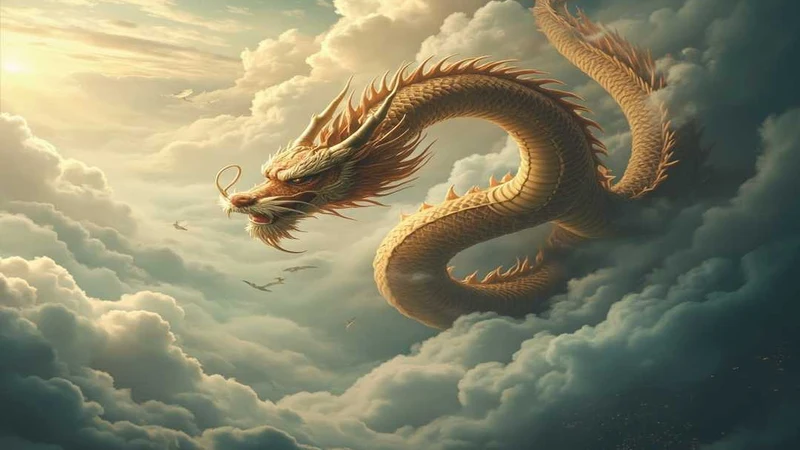
Spiritual animals in Chinese mythology are mythical or sacred creatures whose roles vary across texts, art, and religious traditions. The qilin, phoenix, dragon, and tortoise form the Four Spirits in the Book of Rites; they are different from the directional Four Symbols.
Quick Answer: Chinese Mythology Spiritual Animals
The Four Spirits are qilin, phoenix, tortoise, and dragon. The Four Symbols are Azure Dragon, White Tiger, Vermilion Bird, and Black Tortoise; these lists answer different cultural questions.
Basic Facts: Chinese Mythology Spiritual Animals
- Four Spirits: qilin, phoenix, tortoise, dragon.
- Four Symbols: Azure Dragon, White Tiger, Vermilion Bird, Black Tortoise.
- Boundary: membership and roles depend on the source tradition.
Source note: Read this page with source context from Chinese mythology background, then compare it with the page examples and internal links.
Related reading: Chinese mythology resources Chinese mythology creatures
Today, these legendary creatures continue to inspire illustrations and artistic retellings.
Who Were Chinese Mythology Spiritual Animals?
Chinese mythology spiritual animals were not ordinary creatures.
They include extraordinary creatures with different symbolic and supernatural roles. Their attributes depend on the tale or artwork.
The Four Symbols, or Si Xiang, are directional emblems. The Four Spirits, or Si Ling, are an auspicious group named in the Book of Rites.
The most famous spiritual animals include the Qilin, often called the Chinese unicorn,
which is associated with benevolence and auspicious rule in classical sources.
The Azure Dragon ruled the Eastern heavens and controlled rain and storms.
The Phoenix (Fenghuang) represented grace, virtue, and the empress herself.
The White Tiger guarded the West and symbolized military prowess.
Ancient texts describe these animals with remarkable specificity.
The Classic of Mountains and Seas describes extraordinary animals and their environments. Each description should be checked in its own passage rather than applied to every spiritual creature.
The education ministry dictionary’s Four Spirits entry cites a qilin description with a deer-like body, ox tail, and one horn. This description is not evidence that every illustration or source gives it precisely the same anatomy.
The Legendary Story of Chinese Mythology Spiritual Animals
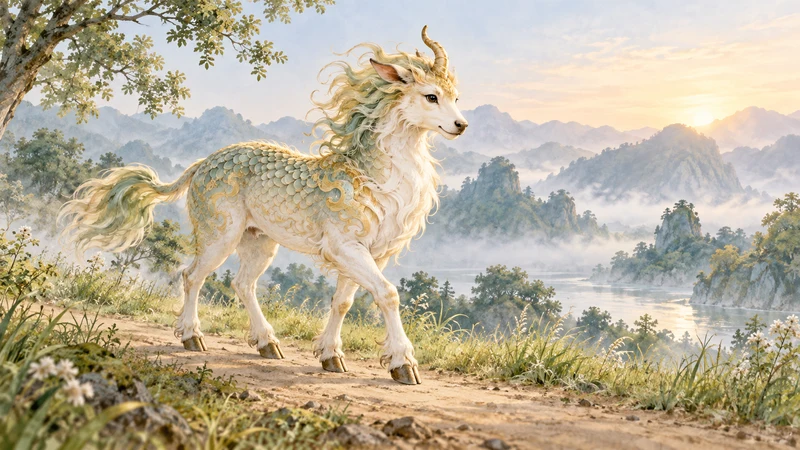
In the Liyun chapter of the Book of Rites, the qilin, phoenix, tortoise, and dragon are identified as Four Spirits. The passage places auspicious appearances within an account of good government and ordered life; its emphasis is auspicious symbolism rather than a dated historical encounter.
This is a useful distinction: symbolic appearances in a classical discussion do not establish a dated historical encounter or one plot shared by all spiritual animals.
The Deeper Meaning Behind Chinese Mythology Spiritual Animals
The ancient Chinese told these stories not merely as entertainment. Chinese mythology spiritual animals embodied fundamental beliefs about cosmic harmony, moral governance, and the relationship between humans and nature.
The Four Symbols are associated with cardinal directions, not the same membership as the Four Spirits.
The Azure Dragon is associated with spring and wood; the White Tiger with autumn and metal; the Vermilion Bird with summer and fire; and the Black Tortoise with winter and water. These are Four Symbols correspondences. The Minneapolis Institute of Art’s tortoise discussion also explains the northern tortoise-and-snake symbol’s connection with black, winter, and water.
By honoring these creatures, ancient Chinese believed they maintained balance with the natural world.
The appearance of a spiritual animal in the human realm carried profound meaning.
These creatures served as moral compass points—reminding emperors that their power depended on virtue, and that the heavens would withdraw their favor if rulers became corrupt.
Confucian scholars interpreted these stories through ethical frameworks.
Chinese Mythology Spiritual Animals in Modern Culture
Modern illustrations and designs reinterpret spiritual-animal motifs. Their appearance in a film, game, fashion item, or brand should be checked against the work itself; a similar-looking creature does not prove an adaptation of a named Chinese source.
The difference between traditional symbolism and a modern invention matters: a designer may borrow a form while changing its powers, personality, or setting.
Disney’s 1998 animated Mulan includes Mushu as a guardian dragon. He belongs to this modern adaptation; this example should not be attributed to the 2020 live-action film.
How to Experience Chinese Mythology Spiritual Animals Today
Museum catalogues make particular examples accessible without relying on broad claims about the largest collection. The Met’s Beneficent Rain is a Yuan-period dragon handscroll associated with weather and natural forces. Its Zhenwu porcelain figure shows how a tortoise helps identify a specific deity.
Compare the object record with the Book of Rites passage when studying a symbol. An artistic interpretation in this article is not a photograph of those museum objects.
Related reading: Chinese Mythology Guardian Animals; Chinese Mythology Shapeshifters; Chinese Mythology Phoenix
Frequently Asked Questions
What are the Four Spirits in Chinese mythology?
The Liyun chapter of the Book of Rites names qilin, phoenix, tortoise, and dragon. This is the Four Spirits group, also called Si Ling.
Are the Four Spirits the same as the Four Symbols?
No. The Four Symbols, or Si Xiang, are Azure Dragon, White Tiger, Vermilion Bird, and Black Tortoise, associated with the four directions.
Why is the qilin auspicious?
Classical descriptions associate it with benevolence and good government. This does not establish a universal rank as the most sacred animal or one fixed appearance story.
Can every spiritual animal speak or transform?
No universal rule is established here. Powers must be tied to a named tale or description rather than inferred from the broad category.
Do spiritual animals predict real events?
Stories and artistic symbols can express hopes, values, or religious beliefs; this article does not establish reliable predictions from sightings or dreams.
Enjoyed this story? Share it!
🐦 Share on Twitter📚 Related Books
Explore more Chinese mythology stories in our curated collection