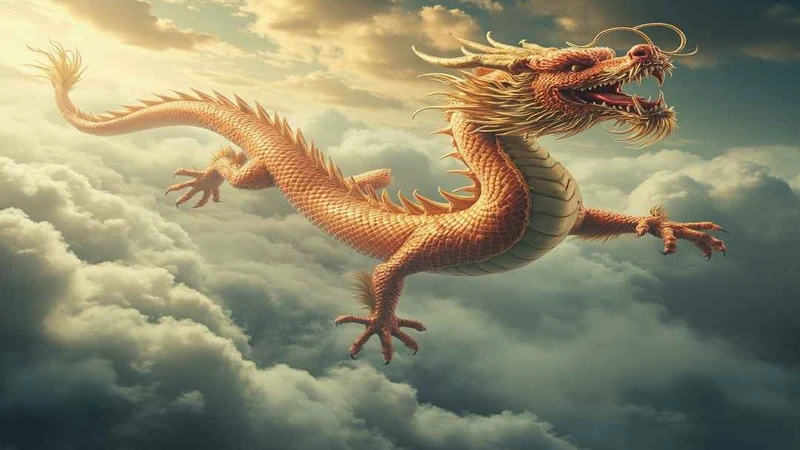
Chinese mythology shapeshifters represent one of Chinese mythology’s most fascinating and complex supernatural phenomena.
Quick Answer
Chinese mythology shapeshifters are figures whose changing forms reveal power, danger, wisdom, illusion, or moral testing. They should be read as story symbols, not as one fixed species or single mythology rule.
Basic Facts
| Topic | Shapeshifters in Chinese mythology |
|---|---|
| Best for | Readers comparing spirits, animals, immortals, and transformation stories |
| Key idea | Transformation often signals hidden identity, spiritual power, or moral tension |
| Common mistake | Treating every shapeshifter as the same type of creature |
Cultural note
Chinese transformation stories come from mythology, folklore, religion, literature, and regional storytelling. Meanings can shift by text, period, and local tradition. Source: Chinese mythology background.
Related reading: Guardian animals Chinese mythology thunder god
Data anchor: This page is structured around the direct answer, key facts, source note, related reading, and common user mistake so readers and answer engines can identify the page’s main claim quickly.
Across thousands of years, the Chinese have told countless stories of beings who could transform their appearance,
moving between human, animal, and spirit forms at will.
These transformation tales reveal deep truths about identity, morality, and the boundaries between the mortal and divine worlds.
The enduring popularity of these stories proves that the ancient Chinese fascination with shapeshifting remains very much alive today.
Shapeshifters appear in nearly every period of Chinese mythological history,
Chinese Mythology Shapeshifters from ancient shamanic traditions to classical literature of the Tang and Song dynasties.
They serve as warnings, as wisdom teachers, and as mirrors for human ambition and desire.
Understanding these beings unlocks a deeper appreciation for Chinese cultural values and worldview.
Who Were Chinese Mythology Shapeshifters?
Chinese mythology shapeshifters were not a single race or species.
Instead, they comprised various supernatural beings with the power to alter their physical form.
The most famous among them were the huli jing (狐狸精), or fox spirits,
which could assume human appearance after centuries of cultivation.
These beings typically appeared as beautiful women or wise old men, using their transformations to interact with humans,
sometimes for love, sometimes for mischief, and sometimes for darker purposes.
Beyond foxes, Chinese Mythology Shapeshifters Chinese mythology recognized many other shapeshifters.
Hun Dun (混沌), the primordial chaos entity, appeared in mythological texts as a formless being.
Dragons throughout Chinese legend could change size and form at will.
Taoist immortals known as zhenren (真人) mastered transformation arts as part of their spiritual cultivation.
Even certain trees, rocks, and household objects could, according to folklore, develop the power to assume living forms.
The ability to shapeshift was never simply magical—it carried profound spiritual and moral implications.
In Taoist thought, transformation represented the practitioner’s ability to transcend the limitations of physical reality.
However, those who used this power deceptively often faced tragic consequences.
The boundary between divine transformation and demonic deception remained constantly contested in Chinese religious thought.
The Legendary Story of Chinese Mythology Shapeshifters
The most celebrated shapeshifter tale comes from the classical novel “Investiture of the Gods” (Fengshen Yanyi),
Chinese Mythology Shapeshifters written around 1620 CE.
The story follows Daji (妲己),
a fox spirit who transforms into a breathtaking beauty to serve the Shang dynasty’s final emperor.
Emperor Zhou (纣王) becomes utterly besotted with her, neglecting his duties and bringing ruin to his kingdom.
Ancient texts describe Daji’s supernatural origins.
According to chapter four of “Investiture of the Gods,
” the fox spirit received orders from the goddess Nüwa (女娲) to possess the body of a maiden and destroy the corrupt Shang regime.
However, the fox exceeded her instructions.
She allegedly cut open pregnant women, boiled prisoners in copper pillars, and engineered the deaths of loyal ministers.
The novel depicts scenes of horrifying cruelty that shocked readers for centuries.
The unexpected twist in this story involves the fox’s true nature. Daji was not merely evil—she was trapped in her role.
Once she had committed these terrible acts, Chinese Mythology Shapeshifters she could never return to her original fox form.
She became permanently bound to her human appearance,
doomed to continue her destructive path until the Zhou dynasty finally overthrew the Shang.
This tragic element transforms Daji from a simple monster into a complex figure who raises questions about fate, compulsion,
and moral responsibility.
Another profound shapeshifter tale appears in the “Records of the Grand Historian” (Shiji) by Sima Qian.
The historian recounts how Emperor Yao (尧) tested his successors by sending them mystical animals that could assume human form.
These creatures tested whether the future rulers possessed the wisdom to see through deception—a crucial quality for governing.
The Deeper Meaning Behind Chinese Mythology Shapeshifters
These transformation stories served as vehicles for philosophical and moral instruction.
The fox spirit’s deceptive beauty symbolized the danger of superficial appearances and uncontrolled desire.
Ancient Chinese audiences understood that someone who could alter their form might also alter their nature,
Chinese Mythology Shapeshifters making trust impossible and vigilance essential.
Confucian scholars used shapeshifter tales to illustrate the importance of ren (仁), or humaneness.
A truly virtuous person, they argued, would not need to hide their true self.
Deception through transformation represented a fundamental failure of moral character.
The fox’s ultimate downfall in most stories reinforced this teaching—evil forms eventually collapsed under their own weight.
Taoist interpretations offered a different perspective.
Transformation represented spiritual cultivation achieved through meditation, Chinese Mythology Shapeshifters breathing exercises,
and ethical living. The goal was not to deceive others but to harmonize with the natural order.
This positive view of shapeshifting appeared in texts describing Taoist masters who could assume different forms to help those in need or to travel between realms.
The shapeshifter phenomenon also reflected ancient Chinese beliefs about the permeability between realms.
Unlike Western traditions that emphasized sharp boundaries between humans and animals,
Chinese mythology saw all beings as part of a continuous spiritual spectrum.
A fox could become a person; a person could become a spirit.
This worldview encouraged respect for all creatures and recognition that visible form did not equal true nature.
Chinese Mythology Shapeshifters in Modern Culture
The shapeshifter legacy dominates contemporary Chinese and global entertainment.
Chinese Mythology Shapeshifters The 2020 film “The Eight Hundred” incorporated fox spirit imagery.
Video games like “Honkai: Star Rail” and “Genshin Impact” feature playable fox characters with transformation abilities that draw directly from classical mythology.
These games introduce millions of young players to ancient tales they might never encounter in academic settings.
International media has embraced Chinese shapeshifters.
The Netflix series “The Witcher” drew inspiration from global transformation legends,
while Disney’s live-action “Mulan” incorporated fox-like companions.
More directly, Chinese cinema has produced numerous films featuring huli jing,
including the 2018 blockbuster “A Chinese Ghost Story” which reimagines classic tales for modern audiences.
Literature continues exploring these themes.
Contemporary Chinese authors like Xu Xiake have written novellas examining the psychology of shapeshifters—what it feels like to wear a false form, Chinese Mythology Shapeshifters to love while hiding one’s true nature.
These works bring ancient mythology into dialogue with modern questions about identity, authenticity, and self-presentation.
The shapeshifter archetype has even entered everyday conversation. Chinese internet users sometimes describe cunning or deceptive people as “fox spirits” (狐狸精), demonstrating how mythology continues shaping modern language and social observation.
How to Experience Chinese Mythology Shapeshifters Today
Visitors to China can explore shapeshifter mythology through numerous cultural sites.
The Phoenix Mountain (Fengshan) in Henan Province contains temples dedicated to fox spirits where locals still make offerings.
The Nüwa Temple in Hebei celebrates the goddess who commanded the original fox transformation.
Museums across China display artifacts depicting transformation scenes,
Chinese Mythology Shapeshifters including Han dynasty mirrors with intricate designs showing shapeshifting foxes.
For those unable to travel, major Western museums offer glimpses into this world.
The British Museum holds Chinese artifacts featuring fox transformations.
The Metropolitan Museum of Art in New York displays paintings of huli jing from various dynasties.
Digital archives like the China National Knowledge Infrastructure provide access to classical texts for researchers.
Cultural festivals provide living connections to these myths.
Chinese Mythology Shapeshifters The Mid-Autumn Festival often features performances depicting fox spirits and moon rabbits.
Regional celebrations in rural areas maintain older traditions of storytelling where elders recount shapeshifter tales to younger generations.
One Last Tale
One lesser-known shapeshifter story comes from the “Collected Strange Tales” (Liaozhai Zhiyi) by Pu Songling,
written in the 17th century.
A poor scholar named Lu was walking home through a forest when he encountered an elderly man who invited him to rest at a nearby cottage.
The scholar spent the night studying,
only to discover by dawn that his host was actually a fox who had assumed human form specifically to hear the teachings of a learned man.
This story carries a beautiful message about the universality of wisdom-seeking.
The fox did not approach the scholar to deceive or harm him.
Instead, Chinese Mythology Shapeshifters he sought the opportunity to learn.
By dawn, the fox had absorbed enough Confucian wisdom to complete his own spiritual transformation.
The tale suggests that the desire to learn transcends species boundaries—a profound democratization of knowledge that continues inspiring readers four centuries later.
The enduring power of Chinese mythology shapeshifters lies precisely in this complexity.
They are not simply monsters or heroes but mirrors reflecting human desires, fears, and aspirations.
As long as people wonder about the true nature of those they encounter and question the relationship between appearance and reality, these ancient transformation tales will continue finding new audiences.
Chinese Mythology Phoenix Chinese Mythology Monsters Chinese Mythology War God Wikipedia
What is the most famous shapeshifter in Chinese mythology?
The fox spirit (huli jing) stands as the most celebrated shapeshifter,
Chinese Mythology Shapeshifters particularly the nine-tailed fox (jiǔ wěi hú).
These beings appeared in texts dating back to the Han dynasty (206 BCE – 220 CE) and remain central to Chinese popular culture today.
Can Chinese shapeshifters change into anything, or are there limitations?
Most classical sources describe specific transformation abilities.
Foxes typically assumed human forms, Chinese Mythology Shapeshifters often beautiful women.
Dragons could change size and travel between water and sky.
Taoist immortals could transform into various objects or creatures as part of their spiritual practice.
Limitations often related to moral purity—corrupt beings lost their powers.
Are all Chinese shapeshifters evil?
No.
While popular culture often emphasizes dangerous fox spirits,
Chinese Mythology Shapeshifters many shapeshifters in classical literature were benevolent.
Some assisted heroes, delivered important messages, or tested human virtue.
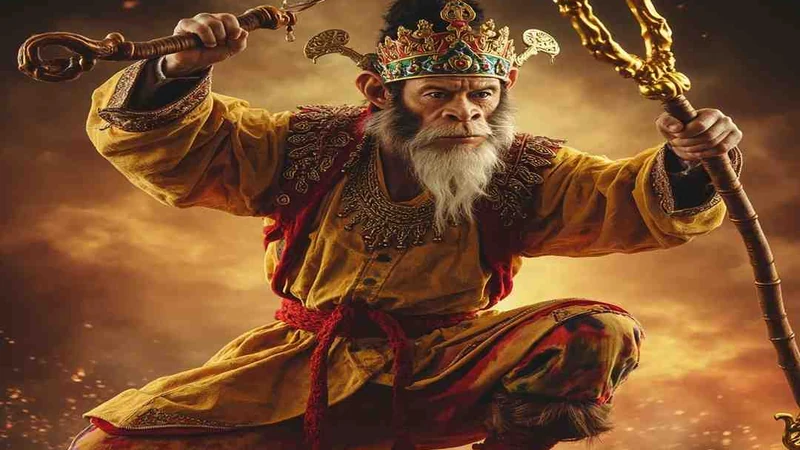
The Monkey King Sun Wukong used his transformation powers heroically throughout “Journey to the West.”
How do Chinese shapeshifters differ from European werewolves?
European werewolves typically involved involuntary transformation triggered by the full moon,
Chinese Mythology Shapeshifters often representing a loss of human control.
Chinese shapeshifters usually maintained voluntary control over their transformations, choosing when and how to change.
The moral dimensions also differed—Chinese transformation could be either virtuous or corrupt depending on the shifter’s intentions.
What is the nine-tailed fox significance?
The nine-tailed fox represented ultimate spiritual power and longevity.
Chinese Mythology Shapeshifters Classical texts suggested that ordinary foxes gained tails as they aged and cultivated their powers.
A nine-tailed fox had achieved the highest spiritual transformation possible for its kind.
These beings were said to possess near-divine wisdom.
Do Chinese people still believe in shapeshifters today?
While formal religious belief has declined, Chinese Mythology Shapeshifters shapeshifter folklore remains culturally significant.
Many Chinese people, particularly in rural areas, maintain folk beliefs about fox spirits and other supernatural beings.
The stories continue influencing literature, film, and popular culture across the Chinese-speaking world.
## One Last Tale One lesser-known shapeshifter story comes from the **”Collected Strange Tales”** (Liaozhai Zhiyi) by Pu Songling,
written in the 17th century.
A poor scholar named Lu was walking home through a forest when he encountered an elderly man who invited him to rest at a nearby cottage.
The scholar spent the night studying,
only to discover by dawn that his host was actually a fox who had assumed human form specifically to hear the teachings of a learned man.
This story carries a beautiful message about the universality of wisdom-seeking.
The fox did not approach the scholar to deceive or harm him.
Instead, Chinese Mythology Shapeshifters he sought the opportunity to learn.
By dawn, the fox had absorbed enough Confucian wisdom to complete his own spiritual transformation.
The tale suggests that the desire to learn transcends species boundaries—a profound democratization of knowledge that continues inspiring readers four centuries later.
The enduring power of Chinese mythology shapeshifters lies precisely in this complexity.
They are not simply monsters or heroes but mirrors reflecting human desires, fears, and aspirations.
As long as people wonder about the true nature of those they encounter and question the relationship between appearance and reality, these ancient transformation tales will continue finding new audiences.
{IMG4}
Enjoyed this story? Share it!
🐦 Share on Twitter📚 Related Books
Explore more Chinese mythology stories in our curated collection