In Chinese mythology erlang shen stands as one of the most iconic and multifaceted warrior gods, revered for his unmatched martial skill, keen sense of justice, and distinctive appearance marked by a third eye on his forehead. For overseas Chinese families passing down cultural tales to children, and for international myth enthusiasts exploring East Asian folklore, Erlang Shen’s stories offer more than just epic battles—they reveal core values of loyalty, righteousness, and accountability that resonate across cultures.
Quick Answer
Chinese mythology Erlang Shen refers to the powerful third-eyed deity known for martial skill, divine sight, demon-subduing stories, and later appearances in Chinese literature and opera.
Basic Facts
- Figure: Erlang Shen / Yang Jian tradition
- Key traits: Third eye, martial power, divine perception, and demon-subduing role
- Reading check: Separate classical story layers from later popular adaptations
- Common mistake: Treating one modern version as the only Chinese mythology Erlang Shen tradition
Data anchor: Chinese mythology Erlang Shen reading = name + attributes + story source + symbolic role + later adaptation.
Unlike many deities who feel distant or rigid, Erlang Shen has a human-like edge: he challenges divine authority when it serves the greater good, honors his mortal roots, and uses his power to protect villagers rather than dominate them. This balance of divinity and relatability is why his tales have endured for over a thousand years, adapting to different eras while retaining their moral core.
Many new readers of Chinese mythology might confuse Erlang Shen with other warrior figures, Chinese Mythology Erlang Shen but his unique traits set him apart. Unlike the fiery, impulsive Monkey King Sun Wukong, Erlang Shen is strategic and disciplined, using his third eye to cut through deception in every battle.
His companion, the loyal celestial dog Tian Gou, is another defining detail—this hound is not just a sidekick, but a symbol of unwavering loyalty, often helping Erlang track demons and enforce justice. These elements combine to make him a figure that feels both larger than life and deeply grounded in the struggles of ordinary people.
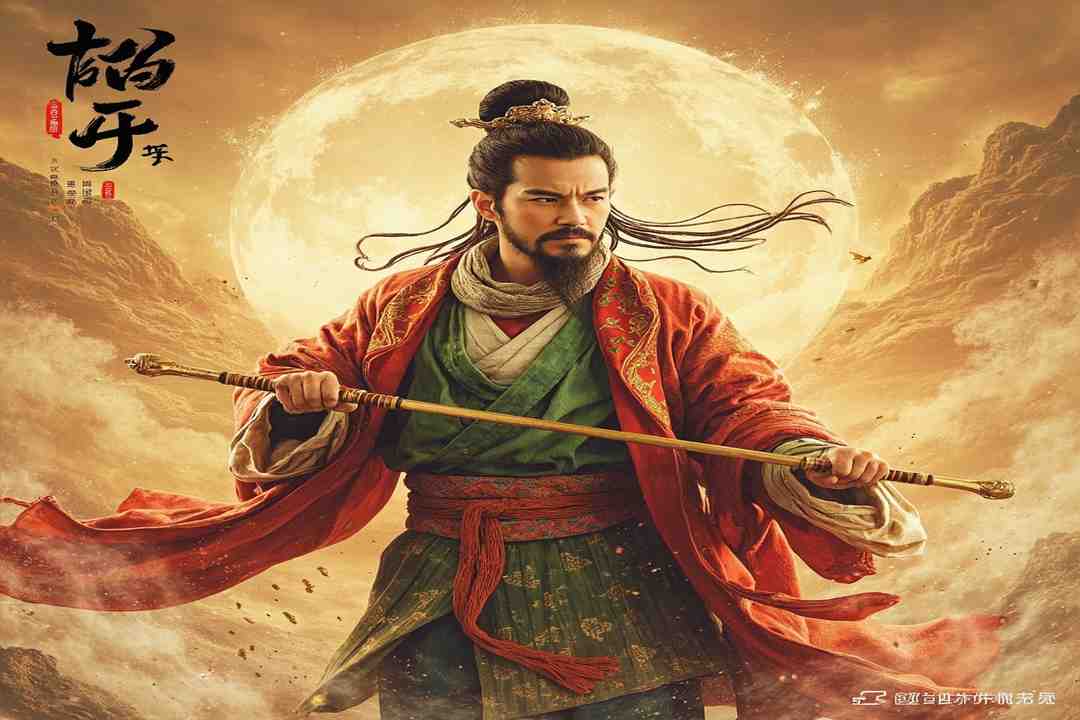
Who Was Chinese Mythology Erlang Shen?
Erlang Shen’s identity is rooted in both ancient myth and real historical figures, a blend that makes him uniquely significant in Chinese culture. In the most well-known literary sources—*Journey to the West* (16th century) and *Investiture of the Gods* (Fengshen Yanyi, 16th century)—his mortal name is Yang Jian, a hero born to a mortal mother and a divine father.
But his origins also stretch back to the Qin dynasty (221–206 BCE), where he was linked to Li Bing, the engineer who built the Dujiangyan Irrigation System in Sichuan to control the Min River’s floods. This connection turned him from a mythic warrior into a folk protector of farmers, a role that remains central to his worship today.
Key divine attributes define Erlang Shen’s power. The third eye on his forehead is his most iconic feature: it can see through illusions, Chinese Mythology Erlang Shen demons’ true forms, and hidden truths, making him nearly impossible to deceive.
In battle, he often transforms into three-headed, six-armed form, wielding multiple weapons at once—including a magic spear and a bow that shoots arrows of light. His status as a god is not absolute: he serves the Jade Emperor in Heaven, but he is not afraid to defy the gods if they act unjustly, a trait that sets him apart from other obedient divine figures.
Regional variations of Erlang Shen’s story add depth to his character. In Sichuan, where Dujiangyan is located, he is worshipped as the guardian of rivers and floods, with temples dedicated to him along the Min River.
In Fujian and Taiwan, he is revered as a protector against evil spirits and a bringer of good fortune. Folk traditions also link him to Mount Taishan, a sacred mountain in Shandong, where he is seen as a judge of souls in the afterlife—another example of his role as a figure of justice.

The Story Behind Chinese Mythology Erlang Shen
Concrete tales of Erlang Shen highlight his courage, Chinese Mythology Erlang Shen wisdom, and commitment to justice, with four core stories that define his legacy. The first is his legendary battle against the Monkey King Sun Wukong in *Journey to the West*.
When Sun Wukong rebels against Heaven, causing chaos by stealing peaches from the Peach Banquet and defeating countless divine soldiers, the Jade Emperor sends Erlang Shen to stop him. Their battle is a masterclass in transformation: Sun Wukong turns into a sparrow, a fish, and even a temple, but Erlang Shen uses his third eye to see through each disguise.
Finally, Erlang captures Sun Wukong with a magic net, a victory that earns him praise from the gods—but also reveals his independence: he refuses to execute Sun Wukong, instead turning him over to the Buddha, showing his preference for balance over cruelty.
The second story comes from *Investiture of the Gods*, where Erlang Shen fights alongside Jiang Ziya, the mythic founder of the Zhou dynasty, to defeat the evil King Zhou of Shang. In one pivotal battle, he faces the demon general Deng Jiugong, who uses dark magic to create illusions and trap soldiers.
Erlang Shen’s third eye cuts through Deng Jiugong’s tricks, and his three-headed form allows him to outmatch the demon in close combat. The battle ends with Deng Jiugong’s defeat, a turning point in the Zhou’s rise to power, and it cements Erlang Shen’s reputation as a divine warrior who can defeat even the most powerful dark forces.
A third story ties back to his mortal roots: taming the Min River dragon. According to folk legend, Chinese Mythology Erlang Shen the Min River was once controlled by a vicious dragon that flooded villages and destroyed crops.
Erlang Shen, in his mortal incarnation as Yang Jian, took up his father’s magic spear and fought the dragon for three days and three nights. He finally trapped the dragon under a stone pillar at the bottom of the river, diverting its waters through irrigation channels to save Sichuan’s farmers.
This story links him directly to Li Bing’s real-world achievements, turning a historical engineering feat into a mythic tale of heroism that benefits ordinary people.
The fourth story is his journey to reunite with his father. In some regional versions, Erlang Shen’s father, Yang Tianyou, was trapped under a mountain by the gods for a past mistake.
Erlang Shen spent years searching for his father, climbing mountains and fighting demons along the way, until he finally found the mountain and used his divine power to lift it. This story highlights his filial piety, a core value in Chinese culture, showing that even a powerful god prioritizes family and loyalty to his parents.
What Chinese Mythology Erlang Shen Means in Chinese Culture
Erlang Shen’s symbolism in Chinese culture is layered, Chinese Mythology Erlang Shen blending divine power with human values. His third eye is not just a physical trait—it represents the ability to see truth beyond appearances, a concept deeply rooted in Chinese philosophy.
In traditional Chinese thought, discernment is key to making just decisions, and Erlang Shen’s eye is a perfect metaphor for this: he does not judge based on surface-level actions, but looks at the heart of the matter. His three-headed, six-armed form symbolizes versatility: he can adapt to any situation, whether fighting demons, protecting villagers, or mediating between gods and mortals.
Rituals surrounding Erlang Shen reflect his role as a folk protector. In Sichuan’s Dujiangyan, every year during the Dragon Boat Festival, villagers hold parades honoring him, carrying his statue through the streets to pray for flood protection.
In temples dedicated to him, devotees offer incense and food, asking for justice in personal matters or safety from disasters. These rituals are not just religious—they are a way to connect with the past, linking modern villagers to the engineer Li Bing and the mythic hero Erlang Shen who saved their ancestors.
His moral lessons are central to his cultural meaning. Unlike many gods who are distant or unapproachable, Chinese Mythology Erlang Shen Erlang Shen is a figure who stands up for the weak.
In tales where the gods ignore the suffering of villagers, Erlang Shen often intervenes, even if it means challenging his superiors. This reflects the Chinese value of “righteousness” (yi), the idea that justice must be upheld regardless of power.
For example, in one folk tale, he defies the Jade Emperor to help a village that was cursed for refusing to pay unfair taxes, showing that divine authority is not above moral duty.
Why Chinese Mythology Erlang Shen Still Matters Today
Erlang Shen’s relevance in modern culture is evident in his presence across media, from films to mobile games. In the 2016 fantasy film *League of Gods*, he is a key character, portrayed as a powerful warrior who helps the gods fight against evil.
In the popular mobile game *Honor of Kings*, he is a playable hero with abilities based on his third eye and three-headed form, attracting millions of young players who learn about Chinese mythology through gameplay. For overseas Chinese children, these modern adaptations make ancient tales accessible, helping them connect to their cultural identity in a fun, engaging way.
For international audiences, Chinese Mythology Erlang Shen Erlang Shen offers a different perspective on warrior myths. Unlike Western warrior gods who are often defined by brute strength alone, Erlang Shen is a balanced figure: he is strong, but he uses his power wisely; he is a god, but he has human-like flaws and loyalties.
This makes his stories relatable to people from all backgrounds, as the themes of justice, loyalty, and standing up for the vulnerable are universal. Many cultural education programs in Western countries now include Erlang Shen’s tales to teach students about Chinese mythology, breaking down stereotypes and fostering cross-cultural understanding.
Beyond media, Erlang Shen’s legacy lives on in cultural preservation efforts. Museums in China, like the Sichuan Museum, have exhibits dedicated to him, displaying ancient statues and artifacts related to his worship.
These exhibits help keep his story alive for future generations, ensuring that the values he represents—justice, compassion, and courage—continue to shape Chinese culture. For anyone interested in exploring Chinese mythology, Erlang Shen is a perfect entry point: his stories are epic, his character is complex, and his lessons are timeless.
Frequently Asked Questions
What is the origin of chinese mythology erlang shen?
Erlang Shen, also known by his mortal name Yang Jian, has origins that blend ancient folk beliefs and classical Chinese literary works. Early roots trace to Sichuan’s local myths, where he was the second son of Li Bing, the renowned ancient hydraulic engineer who tamed the Min River’s floods; Erlang is said to have helped subdue the river’s evil spirit to protect local villagers. His story was later expanded and formalized in texts like *Investiture of the Gods* and *Journey to the West*, where he was reimagined as a powerful celestial warrior, solidifying his place in the broader Chinese mythological canon.
What are the main characters in chinese mythology erlang shen?
Key characters tied to Erlang Shen’s myths include: Erlang himself, a mighty celestial warrior with a third eye (symbolizing divine insight) and the legendary Three-Pronged Spear as his weapon; Xiaotian Quan, his loyal Heavenly Seeing Dog, which aids him in battles by tracking and defeating foes; San Shengmu, his younger sister, a goddess who defied celestial rules to marry a mortal and was imprisoned by their uncle the Jade Emperor; Sun Wukong, the Monkey King, whom Erlang fought to a stalemate in *Journey to the West*; and Li Bing, his legendary father from the early flood-myth origins.
What is the moral lesson of chinese mythology erlang shen?
The core moral lessons of Erlang Shen’s myths center on justice, familial loyalty, and the courage to challenge unjust authority. For instance, when he defies his uncle the Jade Emperor to free his imprisoned sister San Shengmu, he prioritizes familial love and moral right over rigid celestial hierarchy. Additionally, his role as a protector of mortals—whether taming floods, subduing evil spirits, or defending the vulnerable—teaches that great power should be used for the good of others, not for arrogance or control.
How is chinese mythology erlang shen celebrated in modern China?
In modern China, Erlang Shen is celebrated through both traditional religious practices and popular culture. Temples dedicated to him, such as those near Dujiangyan (linked to the ancient flood control myth), still draw pilgrims who pray for protection from natural disasters and good fortune during local festivals. He is a widely beloved figure in modern media, featuring in hit TV adaptations of *Investiture of the Gods*, animated films, and video games, which introduce his story to younger generations. Some rural regions also hold processions honoring him as part of folk rituals, preserving his legacy as a guardian deity.
What are similar myths to chinese mythology erlang shen?
Similar myths in Chinese mythology include the story of Nezha, a rebellious child warrior who defies his father and celestial rules to protect the people, mirroring Erlang’s themes of challenging unjust authority and prioritizing mortal well-being. Another parallel is the myth of Dayu, the ancient hero who tamed catastrophic floods, sharing Erlang’s identity as a savior of communities from natural disasters. The tale of the Cowherd and Weaver Girl also echoes Erlang’s conflict with the Jade Emperor, as it involves a forbidden celestial-mortal love and separation enforced by rigid celestial rules.
Chinese Mythology Famous Stories Explained Chinese Mythology Fox Spirit: Meaning, Stories and Symbolism Chinese Mythology Mythical Creatures List Explained Wikipedia
Enjoyed this story? Share it!
🐦 Share on Twitter📚 Related Books
Explore more Chinese mythology stories in our curated collection