Chinese mythology ghost beliefs are not just tales of spectral figures haunting the mortal world—they are a foundational part of Chinese cultural identity, weaving together respect for ancestors, moral accountability, and explanations for life’s mysteries into a framework that has endured for over two millennia. For overseas readers seeking to understand how Chinese societies frame the line between the living and the dead, these beliefs offer more than ghost stories; they reveal core values like filial piety, compassion, and the importance of maintaining harmony across realms.
This article explores key figures, stories, and meanings behind these beliefs, showing why they still resonate in modern Chinese communities and beyond.
In many Western depictions, ghosts are portrayed as terrifying, vengeful beings, but Chinese mythology ghost beliefs paint a more nuanced picture. Most spirits are not inherently evil: ancestral spirits are revered as protectors of the family, while wandering phantoms (gui) often have unfinished business on earth, such as unfulfilled promises or unresolved grief.
One of the most iconic figures in these beliefs is Yanluo Wang, the King of the Underworld, who presides over a bureaucratic realm where souls are judged based on their earthly deeds. Unlike the Christian concept of heaven and hell, the Chinese underworld is a system of accountability, not eternal punishment—souls are either reincarnated or offered a chance to rest, depending on their actions.
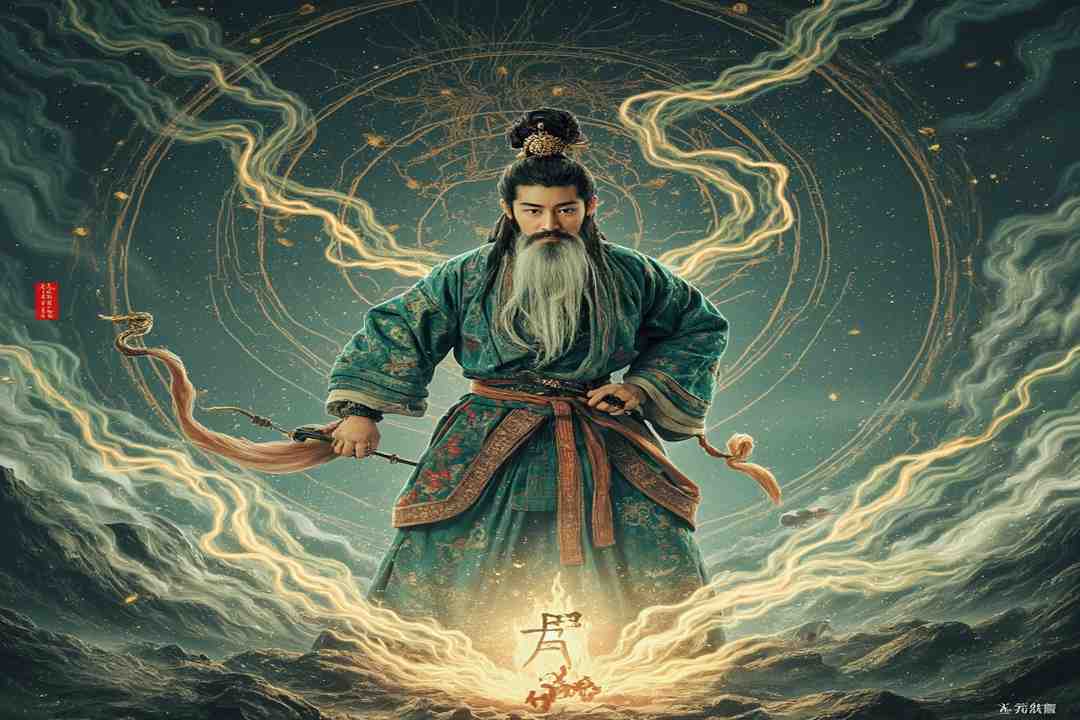
Who Was chinese mythology ghost beliefs?
To understand chinese mythology ghost beliefs, it’s critical to recognize that they encompass a vast network of spirits, rituals, and mythic figures rather than a single story. Central to this system are three key groups: ancestral spirits, wandering hungry ghosts (egui), and underworld officials.
Ancestral spirits are the souls of deceased family members, who are believed to watch over living relatives and offer guidance if properly honored. Wandering hungry ghosts, by contrast, are souls cursed for greed or selfishness in life—they are starved and left to roam the mortal world, seeking sustenance from living people.
Underworld officials like Yanluo Wang and Meng Po (the Lady of Forgetfulness) govern this system, ensuring that souls face judgment before moving on to reincarnation or rest.
Meng Po is a particularly memorable figure in Chinese mythology ghost beliefs. She is said to preside over the Naihe Bridge (Bridge of Forgetfulness) at the entrance to the underworld, where she serves a bowl of Meng Po Tang (Forgetfulness Soup) to all souls crossing into the afterlife.
This soup erases their memories of past lives, allowing them to be reborn without carrying the weight of their previous existence. The story of Meng Po reflects the Chinese belief in new beginnings and the cyclical nature of life, rather than holding onto past regrets.
Another key figure is Zao Jun, the Kitchen God, who is part of both household rituals and ghost belief systems. Every year, on the 23rd day of the 12th lunar month, Zao Jun returns to heaven to report a family’s good and bad deeds to the Jade Emperor.
To ensure he gives a favorable report, families offer him sweets like sticky rice cakes—so his mouth sticks shut and he can’t speak ill of them. This tradition ties into the idea of spiritual accountability, where even small, daily actions are observed and rewarded or punished.

The Story Behind chinese mythology ghost beliefs
One of the most famous stories in chinese mythology ghost beliefs is that of Mulian and the Hungry Ghost Festival, which comes from the Buddhist Yulanpen Sutra. Mulian was a devout disciple of Buddha, who had gained the ability to see into the underworld using his spiritual powers.
There, he discovered his mother, Mrs. Cui, trapped in the realm of hungry ghosts.
She had been greedy and selfish in life—refusing to share food with others, even when she had plenty—so her soul was cursed to starve, no matter how much she ate. Her throat was thin like a needle, and any food she tried to consume turned to fire in her mouth.
Mulian was heartbroken and asked Buddha how to save his mother. Buddha instructed him to perform a ritual on the 15th day of the 7th lunar month, called the Yulanpen Offering.
This ritual involved preparing large quantities of food and offering it to monks and all the hungry ghosts in the underworld. The merit from this act of generosity was transferred to Mulian’s mother, freeing her from her curse.
This story became the origin of the Ghost Festival (Zhongyuan Jie), a major holiday in Chinese communities where families honor their ancestors and help wandering ghosts find peace.
Another story that shapes chinese mythology ghost beliefs is the tale of the wandering ghost who returns to fulfill a promise. In many folk tales, a young man named A’Niu makes a vow to his dying father that he will take care of the family’s land and never sell it.
After his father’s death, a wealthy merchant offers A’Niu a large sum of money for the land, tempting him. One night, his father’s ghost appears, reminding him of his vow and warning him that breaking it will bring misfortune to the family.
A’Niu keeps his promise, and his family thrives. This story teaches the importance of keeping one’s word and honoring commitments to loved ones, even after they are gone.
These stories are not just fictional—they are moral lessons embedded in Chinese culture. The Mulian story emphasizes filial piety, a core Confucian value, while the wandering ghost tale teaches integrity.
Unlike many Western ghost stories that focus on fear, these narratives center on love, responsibility, and the connection between generations.
What chinese mythology ghost beliefs Means in Chinese Culture
Chinese mythology ghost beliefs are deeply intertwined with daily life, shaping rituals, family structures, and moral values. One of the most visible expressions is the Qingming Festival (Tomb Sweeping Day), which falls in early April.
During this holiday, families visit the graves of their ancestors to clean the tombs, offer food and wine, and burn joss paper (paper money and goods) to provide for their loved ones in the afterlife. This ritual is not a sad occasion—it is a time of gathering, where families share stories about their ancestors and reaffirm their bonds across generations.
Another key meaning is the balance between the living and the dead. Chinese mythology ghost beliefs teach that the two realms are not separate; the dead can influence the living, and vice versa.
For example, if a family honors their ancestors properly, they will receive blessings like good health and prosperity. If they neglect their ancestors, they may face misfortune.
This belief creates a sense of responsibility to the past, tying each generation to the one before it.
Culturally, Chinese Mythology Ghost Beliefs these beliefs also reflect the syncretism of Chinese religion—blending Taoism, Buddhism, and Confucianism. The underworld system, with its bureaucratic structure, comes from Taoism, while the Mulian story is a Buddhist tale.
The emphasis on filial piety is a Confucian value. This mix shows how Chinese culture has absorbed and integrated different traditions over thousands of years, creating a cohesive belief system that is uniquely Chinese.
Why chinese mythology ghost beliefs Still Matters Today
Even in the modern world, chinese mythology ghost beliefs remain relevant in many ways. The Ghost Festival is still celebrated in China, Taiwan, Singapore, and other Chinese communities, with parades, food offerings, and rituals to honor ancestors and wandering ghosts.
In recent years, these traditions have even spread to Western countries, as overseas Chinese communities keep their cultural heritage alive.
Modern media has also kept these beliefs alive. The classic 1987 film *A Chinese Ghost Story*, Chinese Mythology Ghost Beliefs based on Pu Songling’s 18th-century collection *Strange Stories from a Chinese Studio*, is a beloved work that blends romance, horror, and traditional ghost lore.
Pu Songling’s stories, which feature hundreds of ghostly figures with human-like emotions and struggles, are still read today, offering insights into Chinese views of life, death, and morality. Video games like *Genshin Impact* also incorporate Chinese ghost and spirit elements, introducing these beliefs to younger audiences around the world.
For overseas Chinese, these beliefs are a way to maintain cultural identity. Growing up in a foreign country, many turn to stories of ancestors and ghosts to connect with their roots.
Schools in Chinese communities often teach these myths as part of cultural education, helping children understand their heritage and values. Even non-Chinese people are drawn to these beliefs because they offer a different perspective on the afterlife—one that is about connection rather than punishment, and about the importance of family and integrity.
Frequently Asked Questions
What is the origin of chinese mythology ghost beliefs?
Chinese ghost beliefs originate from a mix of ancient ancestor worship, philosophical traditions, and religious syncretism dating back to the Shang Dynasty (c. 1600–1046 BCE), where the concept of two-part souls—hun (the ethereal, spiritual soul) and po (the physical, corporeal soul)—was first formalized. Over time, this belief was shaped by Confucian emphasis on honoring ancestors, Taoist cosmology of the afterlife, and Buddhist introductions of concepts like karmic rebirth and the underworld ruler Yanwang (Yama), integrating ghosts into a structured spiritual system tied to moral order and familial duty.
What are the main characters in chinese mythology ghost beliefs?
Key characters in Chinese ghost beliefs include: 1) Yanwang (King of Hell), the primary ruler of the underworld who judges souls based on their earthly deeds; 2) Meng Po, a gentle figure who serves “Meng Po Tang” (the Soup of Forgetfulness) to souls before they are reborn, erasing their past memories; 3) Zhong Kui, a legendary exorcist wronged in life after being denied an imperial exam position, who committed suicide and now hunts evil ghosts to protect humans; 4) Guipo (hungry ghosts), spirits trapped in perpetual hunger due to greed or unfulfilled wishes, often depicted as emaciated with gaping mouths.
What is the moral lesson of chinese mythology ghost beliefs?
The central moral lessons of Chinese ghost beliefs revolve around upholding Confucian values, taking responsibility for actions, and fostering compassion. Beliefs teach that honoring ancestors through rituals and filial piety (xiao) ensures their afterlife well-being, while mistreating others, acting greedily, or violating moral codes leads to suffering as a hungry ghost or underworld punishment. They also emphasize accountability: souls are judged for earthly deeds, reinforcing that good actions are rewarded and harmful ones carry negative karmic consequences, encouraging ethical living.
How is chinese mythology ghost beliefs celebrated in modern China?
In modern China, Chinese ghost beliefs are most prominently celebrated during the Ghost Festival (Zhongyuan Jie, or Yulan Pen Jie), falling on the 15th day of the 7th lunar month. Contemporary celebrations blend tradition and adaptation: families burn joss paper (paper money, goods for ancestors/wandering ghosts), offer food and incense at altars, and release river lanterns to guide lost spirits. Many adapt practices to modern life: some make charitable donations instead of joss paper, while cultural institutions host exhibitions or online events to preserve the festival’s meaning of honoring the dead and strengthening family bonds.
What are similar myths to chinese mythology ghost beliefs?
Related ghost myths and stories in Chinese mythology include: the tale of Nie Xiaoqian, a kind female ghost from Pu Songling’s *Strange Stories from a Chinese Studio* who transcends mischief to love a human scholar, highlighting humanity beyond spiritual form; the legend of Bai Suzhen (the White Snake Lady), a benevolent divine serpent ghost-adjacent figure punished for her forbidden love with a human; and the myth of the Ten Kings of Hell, deities who administer soul judgment, a core part of Chinese ghost belief’s afterlife cosmology.
Chinese Mythology White Snake Spirit Explained 7 Things About Chinese Mythology God Of Wealth Caishen That Chinese Mythology Legend Of Phoenix Explained Wikipedia
Enjoyed this story? Share it!
🐦 Share on Twitter📚 Related Books
Explore more Chinese mythology stories in our curated collection