In the ancient Chinese art of feng shui, the dragon is one of the most powerful symbols. A feng shui dragon is a traditional symbolic object associated with vitality and authority; placement advice varies by school, so it should be presented as cultural practice rather than a guaranteed result.
Dragon imagery, water, and authority
In traditional Chinese culture, dragons are associated with water, weather, and auspicious power. Their imagery can also express imperial authority. These associations explain why dragon ornaments are used in cultural and decorative settings, while the meaning of an individual work depends on its context.
Museum catalogues can establish an artwork’s date, material, and subject. They do not establish that an ornament improves income or health. The Metropolitan Museum’s account of Daoist art provides a useful starting point for distinguishing religious imagery, cosmological ideas, and particular artworks.
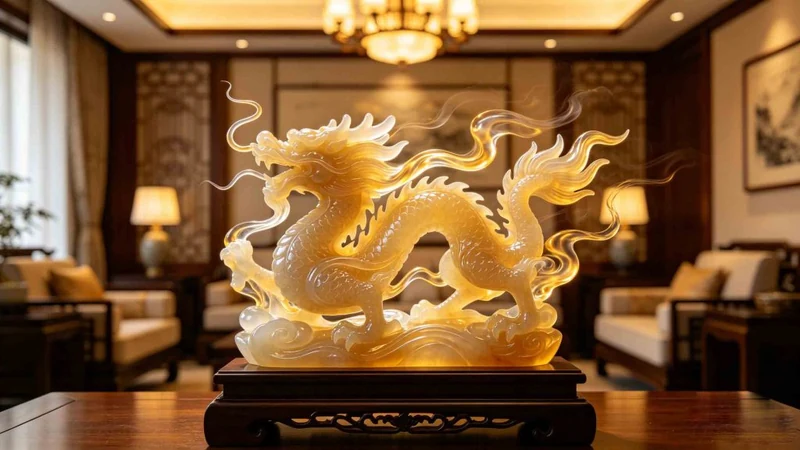
Seven checks before displaying a dragon
1. Identify the tradition behind a placement rule
Some advice refers to directional symbolism; other advice comes from a particular feng shui school or modern seller. Ask which tradition supports the recommendation before treating it as a general rule.
2. Distinguish the Azure Dragon from a dragon ornament
The Azure Dragon is the eastern member of the Four Symbols. A dragon’s appearance alone does not establish that every figurine represents that directional guardian. Compare the object’s description with the Azure Dragon tradition.
3. Choose a stable place
A shelf or table should support the object securely. Its weight, material, and exposure to accidental contact are practical display considerations. They matter regardless of a symbolic interpretation of its direction.
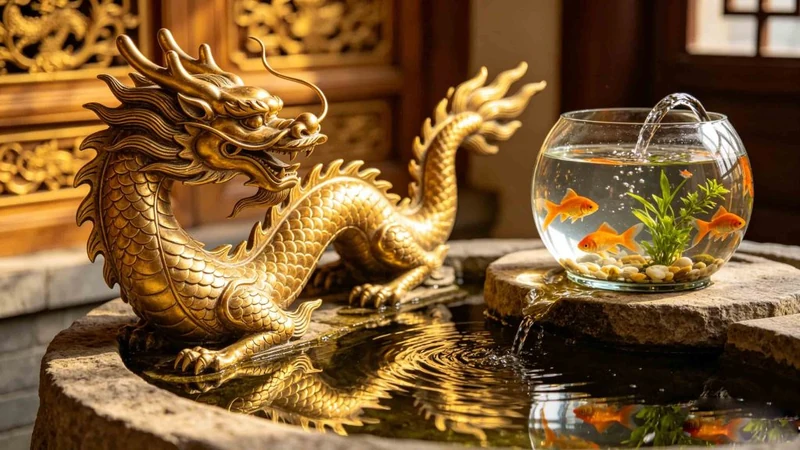
4. Treat a water pairing as symbolism
A dragon beside water can express a familiar cultural association. An indoor water feature has its own maintenance and safety needs; adding a dragon does not demonstrate that the arrangement produces financial benefits.
5. Match the display to the room
Consider the available space, the scale of the ornament, and how people use the room. Claims that one orientation inevitably drains luck, or that a statue prevents career delays, require evidence beyond a decorative object.
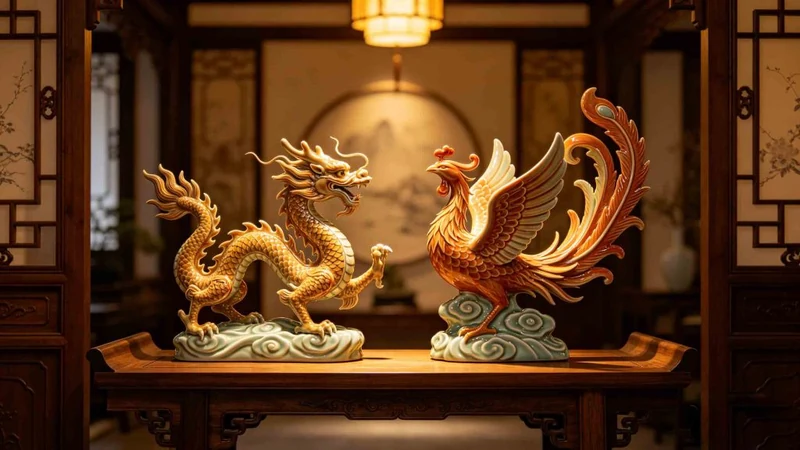
6. Read dragon-and-phoenix pairing in context
The dragon and phoenix can appear together in auspicious and wedding imagery. A pair can communicate hopes for harmony. The symbolism does not mean an object guarantees a relationship outcome or that every phoenix image has the same role.
7. Care for the object according to its material
Cleaning and handling should protect the finish and structure. Distinguish a modern reproduction from a documented antique; age, provenance, and attribution require an object record rather than a story supplied by a seller.
Questions about feng shui dragon claims
Does a dragon ornament guarantee wealth?
No. Its traditional symbolism is not evidence that placement reliably changes income, health, or career outcomes.
Is there one placement rule for every dragon?
No. Interpretations vary by tradition and by the object being discussed. Practical display also depends on room use, scale, and the object’s material.
Related reading: guardian animals and the Four Symbols.
Enjoyed this story? Share it!
🐦 Share on Twitter📚 Related Books
Explore more Chinese mythology stories in our curated collection