The chinese mythology four symbols—known in Chinese as 四象 (Sì Xiàng)—are one of the most enduring and revered sets of mythical creatures in East Asian folklore, woven into the fabric of ancient astronomy, religion, and daily life for over two millennia. These four guardians are more than just decorative figures; they represent a holistic system of balance, direction, and cosmic order that continues to influence modern Chinese culture.
For anyone seeking to understand the depth of Chinese mythology, the story of these four symbols is a critical entry point into how ancient Chinese people viewed the world around them.
The Story Behind chinese mythology four symbols
The origins of the chinese mythology four symbols can be traced back to the Western Han Dynasty (206 BCE – 9 CE), where they were first formally documented in texts like the *Huainanzi*—a comprehensive philosophical and scientific work compiled by scholars under the patronage of Liu An, Prince of Huainan. Before this written record, the four symbols emerged from centuries of ancient Chinese astronomical observations: early astronomers divided the night sky into four quadrants, each marked by a prominent constellation.
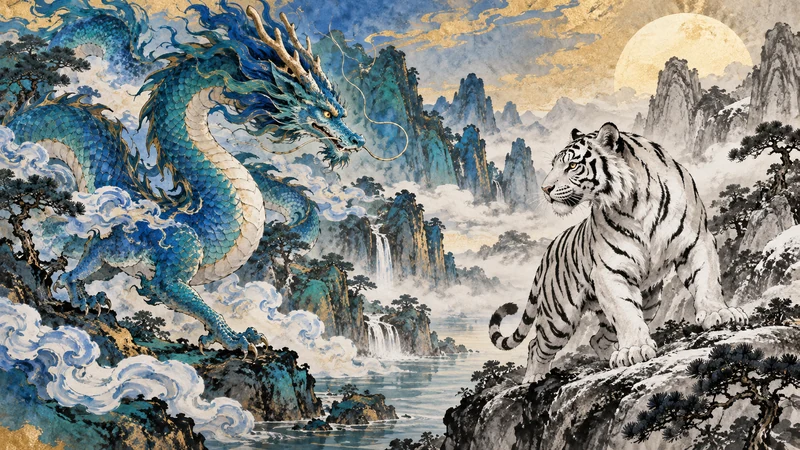
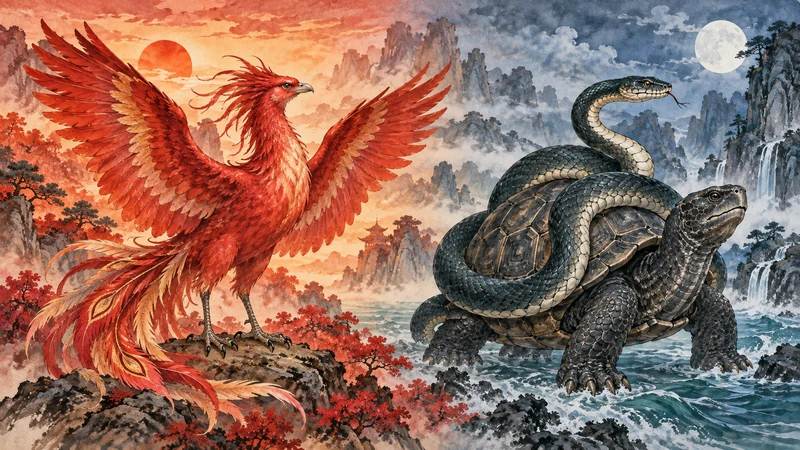
These constellations were then personified into mythical creatures, each linked to a cardinal direction, season, element, and color. The Azure Dragon (Qinglong) guarded the east, spring, and wood; the White Tiger (Baihu) the west, autumn, and metal; the Vermilion Bird (Zhuque) the south, summer, and fire; and the Black Tortoise (Xuanwu) the north, winter, and water.
Over time, these symbols became intertwined with religious practices, particularly Taoism, where they were seen as celestial protectors that warded off evil and maintained harmony between heaven and earth. In Han dynasty tombs, for example, paintings and carvings of the four symbols were placed on walls to guide the deceased’s soul safely to the afterlife, ensuring they would not be disturbed by malevolent spirits.
This link to the afterlife solidified their status as sacred beings, not just astronomical markers, and their influence spread across social classes, from imperial palaces to rural village temples.
What chinese mythology four symbols Really Means
To grasp the true meaning of the chinese mythology four symbols, one must look beyond their individual mythic forms to the core concept of balance that unites them. Each symbol embodies a set of complementary traits that reflect the ancient Chinese belief in yin-yang and the five elements (wood, fire, earth, metal, water).
For instance, the Azure Dragon (yang, masculine energy) and White Tiger (yin, feminine energy) represent the dynamic tension and harmony between opposing forces, while the Vermilion Bird (fire, yang) and Black Tortoise (water, yin) mirror the cyclical rhythm of seasons and life. Beyond cosmic order, the four symbols also serve as cultural guardians: in traditional Chinese architecture, they are often placed at the four corners of buildings or city walls to protect the structure and its inhabitants from misfortune.
A common mistake learners make when studying the chinese mythology four symbols is confusing them with other four-part sets in Chinese culture, such as the Four Heavenly Kings (Buddhist guardians) or the Twelve Earthly Branches. Unlike these sets, the four symbols are rooted in both astronomy and Taoism, with a unique focus on the four cardinal directions and the cyclical nature of seasons.
This confusion often leads to misapplication, such as using the term to describe Buddhist figures, which is historically and culturally inaccurate. Another key detail often overlooked is that the Black Tortoise is not a simple turtle; it is a hybrid creature with a tortoise’s body and a snake coiled around its shell, a design that symbolizes the union of earth (tortoise) and water (snake), reinforcing its role as a guardian of the north and winter.
How to Use chinese mythology four symbols in Conversation
Using the chinese mythology four symbols in conversation requires understanding their cultural context, but they can be incorporated naturally in a variety of settings, from academic discussions to casual chats about travel. Here are four practical, real-world examples:
- When discussing UNESCO World Heritage Sites: “The ancient city wall of Pingyao has four gates, each named after one of the chinese mythology four symbols—local guides often explain how these names reflect the city’s ancient belief in directional protection.”
- In a history class presentation: “Han dynasty burial artifacts frequently feature depictions of the chinese mythology four symbols; these were not just decorative, but served a spiritual purpose, ensuring the deceased’s journey to the afterlife was smooth and unimpeded.”
- When talking about home design and feng shui: “Many modern homeowners in China include small decorations featuring the chinese mythology four symbols, like a wall hanging with the Azure Dragon and White Tiger, to bring balance and good fortune to their living spaces.”
- In a casual chat with a cultural enthusiast: “I recently learned that the chinese mythology four symbols have spread beyond China—they are used in Japanese and Korean folklore too, where they go by names like Seiryu and Baekho, respectively, with slightly adapted traits.”
Each of these examples uses the term correctly, aligning with the symbols’ core meaning as directional guardians and symbols of balance.
Why chinese mythology four symbols Matters Today
The chinese mythology four symbols are not relics of the past; they remain relevant in contemporary Chinese culture, serving as a bridge between ancient traditions and modern life. In art and design, motifs of the four symbols appear in everything from high fashion (embroidered on silk couture) to popular video games (such as *Honor of Kings*, where the four symbols are playable characters with unique abilities tied to their mythic traits).
In feng shui, their influence endures: many practitioners still recommend placing objects representing the four symbols in homes and offices to promote harmony, success, and protection. Culturally, they are a source of national pride, representing China’s rich ancient knowledge of astronomy and philosophy.
For example, during the 2008 Beijing Olympics, the opening ceremony featured subtle references to the four symbols, such as a performance of dancers in the colors of Azure Dragon and Vermilion Bird, to showcase the country’s cultural heritage to a global audience. Additionally, the four symbols are taught in primary schools as part of Chinese cultural education, helping young people connect with their roots and understand the values of balance that have shaped Chinese civilization for millennia.
This ongoing presence ensures that the wisdom of the ancient chinese mythology four symbols continues to shape how modern Chinese people understand their place in the world.
Related Idioms
While the term “chinese mythology four symbols” refers to the set of four guardians, there are several idioms in Chinese that draw on their meanings, often used in contexts related to direction, balance, and protection. One common idiom is 青龙左,白虎右 (Qīnglóng zuǒ, Báihǔ yòu), which translates to “Azure Dragon on the left, White Tiger on the right.” This idiom is widely used in feng shui to describe the ideal arrangement of objects in a space, where the left side should be higher or more prominent (Azure Dragon, symbolizing growth) and the right side lower (White Tiger, symbolizing stability) to maintain harmony.
Another idiom is 朱雀上,玄武下 (Zhūquè shàng, Xuánwǔ xià), meaning “Vermilion Bird above, Black Tortoise below,” which is used to refer to the proper placement of elements in a building’s design—such as a decorative bird motif on the roof and a solid foundation (often marked with a tortoise symbol) at the base. These idioms are deeply rooted in the symbolism of the four symbols, making them a natural extension of the core concept.
Frequently Asked Questions
What is the origin of chinese mythology four symbols?
The four symbols (called Si Xiang in Chinese) originate from ancient Chinese astronomy and cosmology, with roots dating back to at least the Warring States period (475–221 BCE). They were first used to represent the four cardinal directions, corresponding to four prominent star constellations visible in the night sky, and later integrated with concepts of the five elements, seasons, and Yin-Yang balance, becoming foundational to traditional Chinese philosophy, religion, and cultural practices.
What are the main characters in chinese mythology four symbols?
The four core beings of the Chinese four symbols are: 1) Azure Dragon (Qinglong), the guardian of the East, linked to spring, wood, and benevolence; 2) White Tiger (Baihu), the guardian of the West, linked to autumn, metal, and justice; 3) Vermilion Bird (Zhuque), the guardian of the South, linked to summer, fire, and wisdom; 4) Black Tortoise (Xuanwu, often depicted as a tortoise entwined with a snake), the guardian of the North, linked to winter, water, and perseverance. Each acts as a directional protector and symbol of cosmic order.
What is the moral lesson of chinese mythology four symbols?
The key moral lesson of the four symbols emphasizes the importance of balance, harmony, and alignment with the natural cosmic order. They teach that each cardinal direction, season, and element has a complementary virtue, and that maintaining harmony between these interconnected, opposing forces (like Yin and Yang) is essential for individual well-being, societal stability, and overall cosmic equilibrium.
How is chinese mythology four symbols celebrated in modern China?
In modern China, the four symbols are referenced and celebrated in various ways: they appear in traditional and contemporary art (murals, sculptures, calligraphy) adorning temples, public buildings, and cultural sites; integrated into feng shui practices to arrange homes, offices, or spaces for good fortune and balance; featured in popular culture (xianxia novels, TV dramas, video games) as powerful mythical figures; and sometimes included in Lunar New Year decorations or cultural festivals to invoke protection and prosperity.
What are similar myths to chinese mythology four symbols?
Related myths and concepts in Chinese mythology include the Five Deities cosmology, which adds the Yellow Emperor (the central fifth symbol) to the four directional guardians to represent the center and Earth; the Four Heavenly Kings, adapted from Buddhist tradition and paired with the four symbols as additional protectors of the cardinal directions; and individual myths about each symbol, such as the legend of Xuanwu attaining immortality through ascetic cultivation, or the Azure Dragon being revered as a bringer of rain and agricultural abundance.
For an additional background reference on this system, see the Four Symbols overview.
More Chinese Mythology Guides
For more reading, continue with these related guides:
Enjoyed this story? Share it!
🐦 Share on Twitter📚 Related Books
Explore more Chinese mythology stories in our curated collection