Chinese Mythology Symbols and Meanings helps students, parents, and culture readers make a clearer decision about myth symbols as story clues. This guide focuses on what the reader can observe, compare, and apply today, so the page becomes useful rather than decorative.
Quick Answer
Chinese Mythology Symbols and Meanings works best when the guidance is clear, comparative, and classroom-friendly. Start with the reader situation, use a short checklist, avoid memorizing one fixed meaning for every symbol, and review the result through symbol role, character goal, story setting, emotional pressure, and cultural comparison.
Basic Facts
| Best use | reading myths, school projects, symbol notes, and cultural comparison |
|---|---|
| Main idea | symbols change meaning by story context, character goal, and emotional pressure |
| Common symbols | dragon, phoenix, moon, mountain, jade, water, peaches, clouds, and rivers |
| Reading method | identify the symbol, locate the scene, then ask what the symbol changes |
Quick reference: Use this page as a working checklist for myth symbols as story clues. Read the quick answer first, apply the checks, then use the FAQ to catch common errors before making a final choice.
Chinese Mythology Symbols and Meanings: Read Symbols Inside the Story
A good reading of Chinese Mythology Symbols and Meanings starts with story function. The same symbol can suggest protection, distance, renewal, danger, or sacred order depending on where it appears.
Chinese mythology symbols make the most sense when they are read inside the story where they appear. A dragon, phoenix, moon, mountain, or river can change meaning depending on the scene.
Start with the question: what does this symbol do in the story? It may protect, warn, transform, connect worlds, or mark a moral change.
Dragon Symbols and the Power of Water
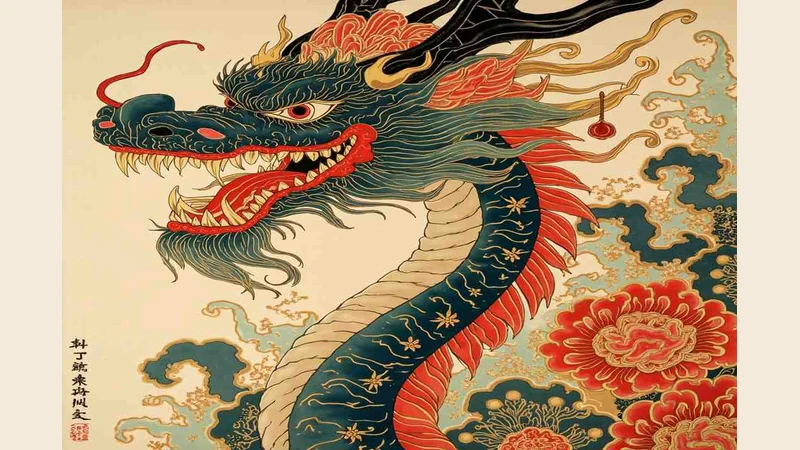
In Chinese Mythology Symbols and Meanings, the dragon often carries water, movement, authority, and transformation. It should be read as a story force, not only as a decorative creature.
Dragons often connect with rain, rivers, authority, and movement between heaven and earth. They are not simply monsters; they can represent power that orders the natural world.
In a story, notice whether the dragon brings help, danger, rank, or transformation. That role is more useful than a single fixed definition.
Phoenix Images and Renewal After Disorder
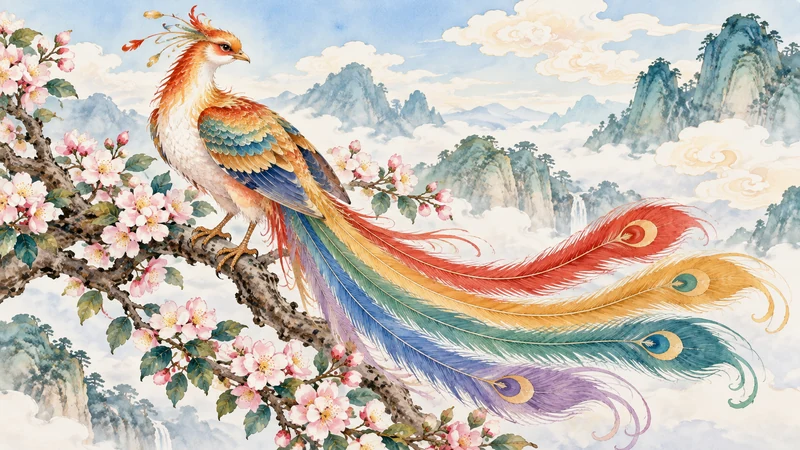
Phoenix imagery often points toward renewal, harmony, virtue, or beauty after disorder. It can mark a return to balance rather than only a decorative bird image.
When the phoenix appears with flowers, clouds, or imperial colors, read the whole visual setting. The surrounding details shape the symbol’s meaning.
Moon Stories, Distance, and Immortality
A useful reading method for Chinese Mythology Symbols and Meanings is to ask what the symbol does in the scene. The moon may separate lovers, mark immortality, create distance from home, or turn a private feeling into a cosmic image.
This is why Chinese Mythology Symbols and Meanings should not be reduced to one fixed dictionary definition. A symbol changes with the character's problem and the story's emotional direction.
A classroom example is to compare the moon as a place with the moon as a feeling. In one story it may be a distant realm; in another, it may show longing, separation, or the wish to cross an impossible distance.
This is why Chinese Mythology Symbols and Meanings should be read with the surrounding scene. The symbol becomes clearer when students ask what problem or desire it brings into view.
Moon symbols often carry distance, longing, time, and immortality. Stories linked with Chang’e or lunar palaces use the moon to make separation feel visible.
Ask whether the moon is a place, a memory, a boundary, or a promise. That question helps students move beyond a simple keyword meaning.
Mountains, Jade, and Sacred Places
For sacred objects, Chinese Mythology Symbols and Meanings often connects material value with moral or ritual value. Jade is not simply expensive; it can suggest refinement, purity, rank, or a link with a sacred order.
A final classroom step is to write one sentence beginning with after this symbol appears. Chinese Mythology Symbols and Meanings becomes clearer when students explain how the story changes after the mountain, jade object, moon, or creature enters the scene.
Mountains can also mark a boundary between ordinary life and sacred space. When a hero travels upward, enters a hidden mountain, or receives an object such as jade, the story is often changing the rules around the character.
For Chinese Mythology Symbols and Meanings, the best student note is not only “mountain means sacred.” It is more useful to write what changes after the mountain appears.
Mountains and jade often point toward sacred distance, refinement, hidden power, or the meeting point between human and divine worlds.
These symbols should be read with setting. A mountain in a myth may be a real landscape, a spiritual boundary, or a place where ordinary rules change.
How Clouds and Rivers Move a Myth Forward
Clouds and rivers are movement symbols. They can show travel, change, hidden forces, or the passage between places and states of being.
When these images appear, look at what changes immediately before and after them. The symbol often works like a hinge in the story.
A Student Method for Symbol Notes
For classroom use, Chinese Mythology Symbols and Meanings becomes clearer when students record symbol, scene, and function in three columns. The function column keeps the answer from becoming a loose definition.
Use a three-column note: symbol, scene, function. The function column should explain what the symbol does, not only what it is called.
This method keeps the reading grounded and prevents students from memorizing isolated meanings that do not fit the story.
Compare One Symbol Across Cultures
When comparing cultures, Chinese Mythology Symbols and Meanings should be handled carefully. Similar images can have different roles, so the comparison should focus on story effect rather than only visual resemblance.
Comparison can help, but it should come after the Chinese story is clear. A dragon in Chinese mythology does not carry the same default meaning as a dragon in many European tales.
Choose one symbol and compare role, setting, and emotional effect. That creates a stronger cultural reading than saying two symbols are simply the same.
Further Reading
Continue with Chinese mythology vs Greek mythology and Chinese mythology school project. For an outside reference, see Metropolitan Museum Heilbrunn Timeline.
Frequently Asked Questions
Do Chinese mythology symbols have fixed meanings?
No. A symbol has a range of meanings, and the story context decides which meaning is active.
Why is the dragon so common in Chinese myths?
The dragon can connect rain, rivers, authority, transformation, and sacred power, so it works in many story roles.
What does the moon usually suggest?
The moon often suggests distance, longing, cycles, beauty, or immortality, depending on the story.
How should students explain a symbol?
Name the symbol, explain the general meaning, then show what it changes in that specific myth.
Can I compare Chinese symbols with Greek or Norse myths?
Yes. Comparison is useful when it shows how the same image plays a different story role in another culture.
}
Additional Practical Notes
When reading animals in Chinese Mythology Symbols and Meanings, students should notice whether the creature protects, warns, transports, tests, or transforms a character. That action usually explains the symbol better than appearance alone.
Dragons, phoenix-like birds, turtles, and tigers can all carry power, but Chinese Mythology Symbols and Meanings depends on the role each creature plays. A guardian creature creates a different meaning from a threatening one.
Additional Practical Notes
The safest rule for Chinese Mythology Symbols and Meanings is to use the story first and the symbol list second. If the symbol does not affect a choice, warning, transformation, or relationship, the interpretation may be too forced.
Teachers can also ask students to compare two passages before defining a symbol. Chinese Mythology Symbols and Meanings is more reliable when the same image is checked across scenes instead of treated as a memorized answer.
For review notes, Chinese Mythology Symbols and Meanings should end with one plain conclusion: what the symbol reveals about fear, hope, power, loss, or transformation in that specific story.
Enjoyed this story? Share it!
🐦 Share on Twitter📚 Related Books
Explore more Chinese mythology stories in our curated collection