A Chinese mythology school project is more than just a textbook assignment—it’s an opportunity to dive into 5,000 years of stories that shaped Chinese culture, from the goddess Nüwa who mended the sky to the trickster god Sun Wukong. For students looking to balance creativity, research, and cultural learning, this project type offers endless angles, whether you’re making a comic, a diorama, or a podcast.
Quick Answer
A Chinese mythology school project should help students choose a focused topic, compare sources, explain story meaning, and avoid turning myths into random character lists.
Basic Facts
- Project type: Student mythology research or presentation
- Best use: School reports, slides, posters, and classroom discussion
- Main check: Topic focus, source, story summary, symbol meaning, and comparison question
- Common mistake: Listing many gods without explaining what the story teaches
Quick reference: chinese mythology school project = focused topic + source + story meaning + visual example + short conclusion.
The best projects avoid generic overviews by focusing on a single myth, character, or symbol, turning abstract folklore into something tangible.
Many students assume a Chinese mythology school project requires memorizing long lists of gods and monsters, but that’s a mistake. The assignment’s true power lies in connecting personal curiosity to universal themes—like courage, sacrifice, or belonging—that these myths explore.
For example, a 10th grader in Chicago once turned a project about the myth of Chang’e (the Moon Goddess) into a bilingual zine, pairing the original story with modern poems about loneliness, which earned her an A and a spot in the school’s literary magazine.

What Is a Chinese Mythology School Project?
A Chinese mythology school project is a student assignment focused on exploring, interpreting, or presenting elements of traditional Chinese folklore, myths, and legends. Unlike general history projects, it centers on stories that blend divine beings, magical creatures, and moral lessons, often drawn from ancient texts like *Shanhai Jing* (Classic of Mountains and Seas) or *Huainanzi*.
The scope is flexible: it can be a written report, a visual art piece, a performance, or a digital presentation, tailored to a student’s interests and grade level.
For example, Chinese Mythology School Project a middle school project might focus on a single mythic figure, while a high school project could compare Chinese and Greek flood myths. The key is to avoid surface-level summaries—instead, the best projects dig into the context of the myth, like how Yu the Great’s flood story reflects ancient Chinese efforts to control rivers, or how Sun Wukong’s rebellion against the Jade Emperor speaks to themes of individual empowerment.
Another defining feature of this project type is its cultural accessibility. Many students use it to connect their own identities: for example, a student of Chinese descent might highlight a myth that’s part of their family’s traditions, while a non-Chinese student might use it to learn about a culture different from their own.
Teachers often encourage this personal connection, as it makes the project more engaging and memorable.
The Story Behind a Chinese Mythology School Project
The most successful Chinese mythology school projects are rooted in a specific, vivid story—one that has clear characters, conflicts, and consequences. Take the example of an 11th grade student in Toronto who chose the myth of Nüwa, the goddess who mended the sky after a cosmic battle broke the heavens.
Instead of just summarizing the story, she reimagined it as a graphic novel, adding details from *Shanhai Jing* about the four divine beasts that helped Nüwa: the Qilin, the Phoenix, the Turtle, and the Dragon. Her project included sketches of the cracked sky, the five-colored stones Nüwa used to repair it, and a scene where she creates the first humans from clay, blending ancient text with artistic creativity.
This student’s project stood out because it didn’t stop at retelling: it explained why the myth matters. She wrote a short essay in her project about how Nüwa’s act of fixing the sky reflects the ancient Chinese belief that even the most broken worlds can be repaired through care and effort.
Another example is a 9th grader in Sydney who made a podcast about Chang’e, the Moon Goddess, and her companion Hou Yi. The podcast included interviews with his Chinese grandmother, who told him the story of how Chang’e took the elixir of immortality to keep it from a greedy thief, then had to live alone on the moon.
The student added modern music and sound effects, like the rustle of moon grass, to bring the story to life for his classmates.
A common mistake students make here is choosing too broad a topic, Chinese Mythology School Project like “all Chinese myths,” which leads to a superficial overview. Instead, focusing on one story and diving deep into its details—like the specific animals in Nüwa’s story, or the role of the moon in Chang’e’s tale—turns a basic assignment into something that shows genuine understanding.
For instance, a project on Yu the Great’s flood should include how he used dredging instead of blocking rivers, a detail that reflects ancient Chinese engineering knowledge, rather than just saying he “stopped the flood.”
What a Chinese Mythology School Project Means in Chinese Culture
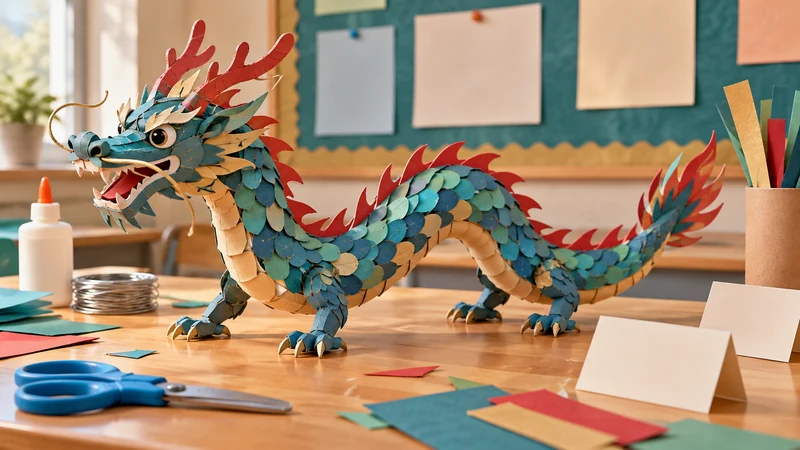
When a student creates a Chinese mythology school project, they’re not just making a school assignment—they’re engaging with a set of cultural symbols that have shaped Chinese society for millennia. For example, the dragon, a central figure in many myths, isn’t the evil creature of Western folklore; it’s a symbol of good fortune, power, and imperial authority.
A project that includes the dragon’s role in Chinese culture might explain how dragon dances are performed during Lunar New Year to bring rain and prosperity, a ritual rooted in myths about dragons controlling water.
Another key symbol in these projects is the phoenix, Chinese Mythology School Project or Fenghuang, which represents grace, virtue, and renewal. In the myth of the phoenix’s rebirth from fire, a student might connect this to Chinese beliefs about resilience and the cyclical nature of life.
Many traditional Chinese festivals, like the Mid-Autumn Festival, are tied to myths like Chang’e’s story of living on the moon. A project that explores this link can show how myths are not just old stories, but living parts of cultural practices that are still celebrated today.
The moral lessons in these myths also matter. For instance, Yu the Great’s story teaches patience and strategic thinking: he spent 13 years controlling the flood, refusing to use force like his father before him.
This lesson is still relevant today, and a project that highlights it can show how ancient wisdom applies to modern life. Nüwa’s story, on the other hand, emphasizes compassion and responsibility—she didn’t have to mend the sky, but she did it to protect the people she created.
Many of these myths also include rituals that are still practiced today. For instance, the Dragon Boat Festival honors the poet Qu Yuan, a figure from Chinese history who is sometimes linked to mythic themes of loyalty.
A project that connects the Dragon Boat Festival to myths of water and community can show how myths evolve into cultural practices that are part of modern life.
Why a Chinese Mythology School Project Still Matters Today
A Chinese mythology school project is more relevant than ever, as modern media continues to draw on these ancient stories. For example, the 2023 film *Ne Zha* (a modern retelling of the myth of the rebellious god Ne Zha) became a global hit, grossing over $1 billion at the box office.
A project that compares the original myth of Ne Zha to the film can show how myths adapt to new times, while still keeping their core message—about breaking stereotypes and choosing your own destiny.
Games like *Genshin Impact* also use Chinese mythological figures, like the archons based on Taoist deities, introducing these stories to a new generation. A project that explores how Sun Wukong is portrayed in *Genshin Impact*—as a powerful, free-spirited character who challenges authority—can connect traditional folklore to modern pop culture, making the topic feel fresh and exciting.
Many museums, like the National Museum of China, have exhibits on Chinese myths, and a project that visits one of these can add a tangible, real-world element that brings the stories to life.
For students, this project also helps build cross-cultural understanding. As the world becomes more connected, learning about other cultures’ stories is key to empathy.
A Chinese mythology school project that includes elements like bilingual text (if the student is bilingual) or connections to their own family’s traditions can help them share these stories with others, breaking down stereotypes about Chinese culture. Even non-Chinese students can use this project to learn about universal themes that resonate across all cultures, like love, sacrifice, and courage.
This kind of project also encourages critical thinking: students must analyze how myths are created, adapted, and used to convey values, skills that are valuable beyond the classroom.
Frequently Asked Questions
What is the origin of chinese mythology school project?
The origin of the Chinese mythology school project lies in modern educational efforts to integrate China’s ancient cultural heritage into K-12 curricula. It was developed to make complex mythological narratives relatable for students, typically introduced in middle school literature or social studies classes to teach cultural identity, historical context, and universal moral values through engaging, storytelling-based learning.
What are the main characters in chinese mythology school project?
Key characters highlighted in this school project are iconic figures from Chinese mythology chosen for their educational relevance: Pangu (the primordial being who created the world by separating heaven and earth), Nüwa (the goddess who mended the sky and molded humanity from clay), Sun Wukong (the clever, rebellious Monkey King from Journey to the West), Chang’e (the moon goddess who lives on the moon with her jade rabbit), and Yu the Great (the hero who tamed devastating floods to save ancient China).
What is the moral lesson of chinese mythology school project?
The core moral lessons of the Chinese mythology school project are rooted in traditional Chinese cultural values: resilience and perseverance (seen in Sun Wukong’s long journey to attain enlightenment and Yu the Great’s decade-long flood control work), compassion and sacrifice (exemplified by Nüwa giving up her own body to repair the sky), respect for nature and ancestors, and the importance of community well-being over individual gain.
How is chinese mythology school project celebrated in modern China?
In modern China, this school project is celebrated through interactive, hands-on activities: students perform skits of mythological scenes, create art or crafts of mythical characters, participate in myth recitation competitions, write original stories inspired by myths, and sometimes take field trips to myth-linked cultural sites like the Kunlun Mountains or the Palace Museum’s myth-themed exhibitions. These activities make learning fun while deepening students’ connection to their cultural roots.
What are similar myths to chinese mythology school project?
Similar myths included in this school project to expand students’ understanding of Chinese mythology are foundational stories that share themes of heroism, creation, and morality: Hou Yi shooting the nine suns (about protecting humanity from natural disasters), the Legend of the White Snake (a romantic tale of love and loyalty between a divine snake and a human), and the story of the Cowherd and the Weaver Girl (a myth about separated lovers and the annual reunion across the Milky Way). These myths complement the project’s main narratives by offering diverse perspectives on Chinese cultural values.
How Chinese Mythology Erlang Shen Became a Chinese Myth Chinese Mythology Adventure Stories Explained How Chinese Mythology Kunlun Mountain Became a Chinese Myth Wikipedia
Enjoyed this story? Share it!
🐦 Share on Twitter📚 Related Books
Explore more Chinese mythology stories in our curated collection