The chinese mythology white snake spirit is one of the most beloved and enduring figures in East Asian folklore, weaving together themes of forbidden love, spiritual transformation, and the tension between human and supernatural worlds. For centuries, her story has captivated audiences across generations, from ancient scrolls to modern films, offering a window into the values and imagination of Chinese culture.
What makes her tale so compelling is not just her power as a snake spirit, but her journey to understand what it means to be human—all while challenging the boundaries between the divine, the magical, and the mortal. This legend is not merely a mythic fable; it is a reflection of how ancient Chinese societies grappled with questions of identity, morality, and the pursuit of connection.
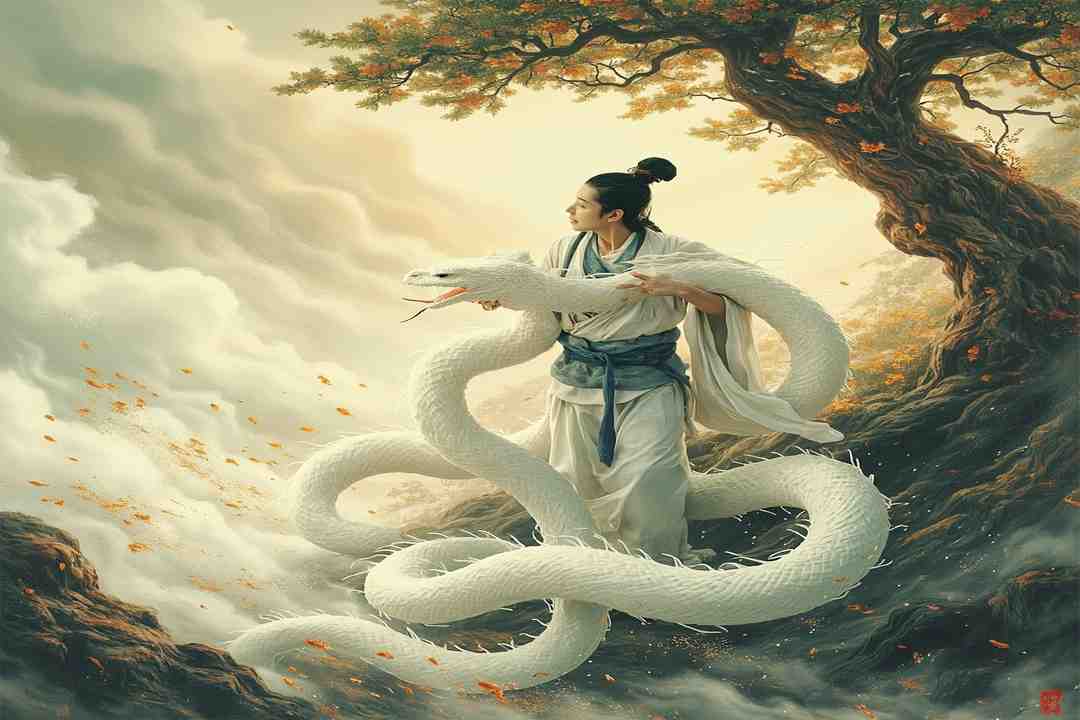
Who Was chinese mythology white snake spirit?
The chinese mythology white snake spirit is more than a mere creature of legend: she is a xian, or immortal spirit, who spent over a thousand years cultivating her power on Mount Emei, a sacred Taoist site in Sichuan Province known for its mist-shrouded peaks and ancient temples. Unlike many supernatural beings in Chinese folklore, she did not start as a malicious force; instead, she absorbed the essence of the moon and sun through quiet practice, slowly evolving into a being capable of taking human form.
Her mortal name, Bai Suzhen, is the identity she adopts when she descends to the human world, seeking to experience life beyond the confines of her mountain sanctuary.
Her closest companion is Xiao Qing, a green snake spirit who is her sworn sister and confidante. Xiao Qing is often portrayed as more impulsive and fiery than Bai Suzhen, acting as a foil to the white snake’s gentle, thoughtful nature.
Together, they leave Mount Emei to explore the mortal realm, drawn by curiosity about human customs and emotions. This dynamic—two spirits navigating human society—adds layers to the myth, highlighting the contrast between supernatural power and human vulnerability.
A common misconception about the chinese mythology white snake spirit is that she is a villainous demon, but this is a misreading of her character. She is driven by empathy and a desire for love, not harm.
In traditional retellings, her cultivation is rooted in kindness, and her choice to take human form is an act of courage, not trickery. This nuance is key to understanding why the myth has endured: it centers a protagonist who defies expectations to pursue what she believes is right.
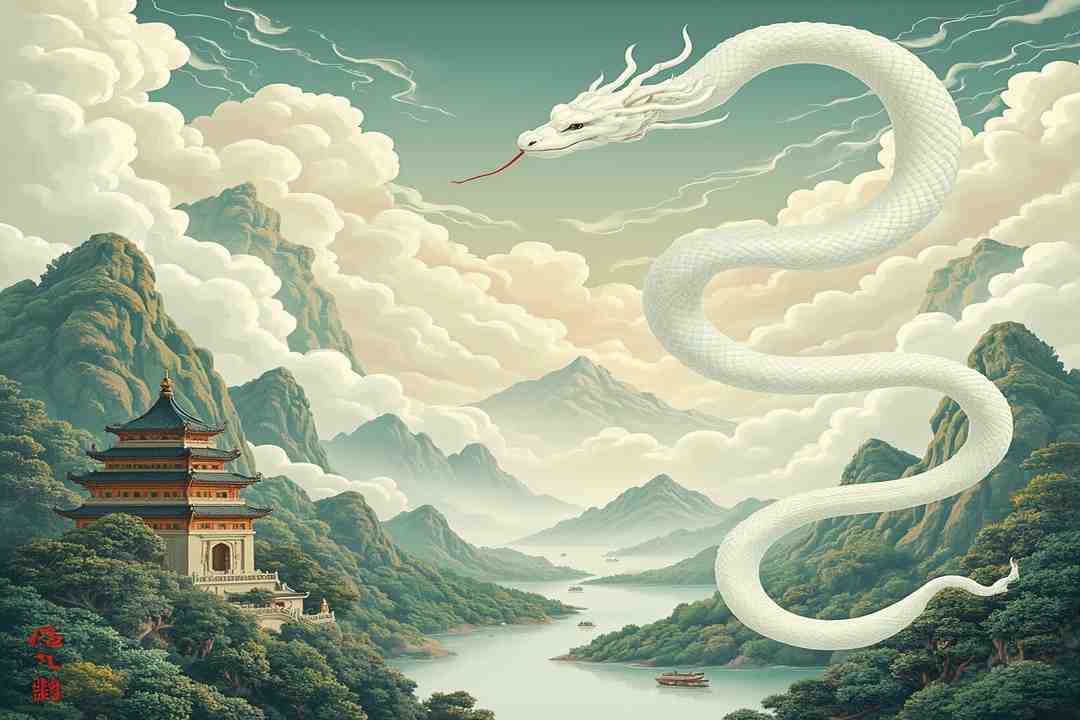
The Story Behind chinese mythology white snake spirit
The core narrative of the chinese mythology white snake spirit unfolds during the Song Dynasty, set in the vibrant city of Hangzhou, a place of canals, temples, and bustling markets. Bai Suzhen and Xiao Qing arrive in Hangzhou, and fate brings them to the Broken Bridge on West Lake, where Bai Suzhen meets Xu Xian—a kind, humble mortal pharmacist who is kind to strangers.
When a sudden rainstorm hits, Bai Suzhen offers Xu Xian her umbrella, sparking a gentle conversation that evolves into a deep bond. They marry soon after, and Bai Suzhen uses her magical powers to help Xu Xian’s pharmacy thrive, curing the sick and bringing prosperity to their small community.
The story’s turning point comes during the Dragon Boat Festival, Chinese Mythology White Snake Spirit a traditional holiday where families drink realgar wine to ward off evil spirits. Unbeknownst to Bai Suzhen, realgar is toxic to snake spirits.
When Xu Xian insists she drink the wine to honor the festival, she cannot refuse—and her true form as a giant white snake is revealed. Horrified, Xu Xian dies of shock, and Bai Suzhen is devastated.
To save her husband, she travels to the Underworld (Diyu) to steal the Magic Herb of Immortality, a powerful plant guarded by fierce spirits. Her act of risking her own freedom to revive Xu Xian underscores the depth of her love.
The conflict escalates when Fahai, a stern Buddhist monk, discovers Bai Suzhen’s true identity. Believing she is a demon who has corrupted a mortal, he confronts her, warning her to return to the supernatural realm.
When she refuses, Fahai imprisons her under Leifeng Pagoda, a famous landmark in Hangzhou. For decades, Bai Suzhen remains trapped, but she gives birth to a son, Xu Shilin, before her imprisonment.
The story’s resolution comes when Xu Shilin grows up, passes the imperial civil service exam with top honors, and petitions the gods to release his mother. In some versions, the gods intervene, and Bai Suzhen is freed, though she remains a spirit—her love for Xu Xian and their son enduring across boundaries.
What chinese mythology white snake spirit Means in Chinese Culture
The chinese mythology white snake spirit carries layered symbolic meaning in Chinese culture, reflecting core values and beliefs. First, white is a color associated with purity and spiritual transcendence in traditional Chinese symbolism, but Bai Suzhen’s choice to embrace human life adds a twist: she uses her purity not to remain a distant immortal, but to connect with others.
This challenges the idea that immortality is the highest goal; instead, it suggests that love and connection are more meaningful than eternal life.
Another key theme is the tension between different spiritual and philosophical traditions. Bai Suzhen is a Taoist immortal, while Fahai is a Buddhist monk, creating a clash between Taoist emphasis on personal freedom and Buddhist focus on order and discipline.
This tension mirrors the historical coexistence of Taoism and Buddhism in China, showing how these traditions have long engaged with each other’s ideas of morality and purpose. The myth does not take a side, but instead explores the cost of rigid adherence to rules versus the value of compassion.
Culturally, Chinese Mythology White Snake Spirit the legend of Bai Suzhen is tied to community and ritual. For example, during the Dragon Boat Festival, many families in China still avoid realgar wine for loved ones who are believed to have “snake-like” traits, a nod to the myth’s warning about the wine’s danger to snake spirits.
Additionally, the story has been adapted into countless traditional art forms, including Peking opera, shadow puppetry, and woodblock prints, keeping it alive in folk culture for centuries. A concrete example is the 16th-century novel *The Legend of the White Snake* (Bai Suzhen Zhuan), which codified the myth and spread it across China, making it a staple of folk literature.
Beginners to Chinese mythology should prioritize the humanizing aspects of Bai Suzhen’s tale, rather than focusing solely on the supernatural elements. The story’s power lies in its relatable characters—her longing for love, her grief when Xu Xian dies, her determination to protect her family—making it accessible to audiences of all backgrounds, while still being rooted in Chinese cultural values.
Why chinese mythology white snake spirit Still Matters Today
The chinese mythology white snake spirit remains relevant in modern culture, appearing in films, books, games, and even educational materials, both in China and around the world. One of the most famous modern adaptations is the 2019 animated film *White Snake* by Light Chaser Animation, which reimagines the story as a visually stunning, emotionally resonant tale of identity and love.
The film was a global hit, introducing the myth to a new generation of English-speaking audiences who may not have encountered traditional Chinese folklore before.
In addition to film, the myth appears in mobile games, where Bai Suzhen is often portrayed as a powerful, sympathetic character who fights for justice. Educational resources for children, such as graphic novels and storybooks, simplify the tale while retaining its core themes, helping young learners understand Chinese cultural values through a beloved story.
Museums, like the China National Museum in Beijing, have featured exhibits on the legend, displaying ancient scrolls and artworks related to Bai Suzhen, connecting modern audiences to their cultural heritage.
For English readers, the myth’s universal themes—forbidden love, sacrifice, and the fight against injustice—make it easy to relate to, while the unique cultural elements (Taoist cultivation, Buddhist philosophy, traditional Chinese rituals) offer a fresh perspective on storytelling. Search interest in the “chinese mythology white snake spirit” has grown steadily in recent years, as more people seek out diverse, culturally rich myths beyond Western fairy tales.
This popularity reflects a growing global curiosity about Chinese folklore and its ability to speak to human experiences across borders.
Frequently Asked Questions
What is the origin of chinese mythology white snake spirit?
The White Snake Spirit myth has roots in ancient Chinese folk beliefs about shape-shifting animal spirits. Its earliest written traces appear in Song Dynasty (960–1279 CE) tales, but it was fully formalized in the Ming Dynasty (1368–1644 CE) collection “Stories to Caution the World” by Feng Menglong, which refined the character of Bai Suzhen (the white snake) and her story. Over time, it absorbed elements from Tang Dynasty legends and Buddhist folklore, becoming one of China’s most beloved folk myths.
What are the main characters in chinese mythology white snake spirit?
The core characters include: 1) Bai Suzhen, a thousand-year-old kind white snake spirit who takes human form to seek enlightenment and falls in love; 2) Xiao Qing, a green snake spirit and Bai Suzhen’s loyal sworn sister who supports her through trials; 3) Xu Xian, a gentle human pharmacist and Bai Suzhen’s husband, often torn between his love for her and external pressures; 4) Fahai, a strict Buddhist monk who views supernatural spirits as threats to cosmic order and repeatedly tries to separate the couple.
What is the moral lesson of chinese mythology white snake spirit?
The central moral is that genuine love and devotion transcend species, social boundaries, and rigid norms. The myth emphasizes compassion, loyalty, and the fight for individual happiness against oppressive authority (represented by Fahai). It critiques the idea that unconventional relationships or supernatural beings should be punished for deviating from societal expectations, highlighting empathy over blind adherence to rules.
How is chinese mythology white snake spirit celebrated in modern China?
The myth is widely celebrated through modern cultural adaptations: it is a staple in Peking Opera, Yue Opera, and other traditional performances; the 1992 Taiwanese TV series *New Legend of Madame White Snake* remains a classic watched by generations. It also appears in animated films, children’s literature, and folk festival performances in regions like Jiangsu and Zhejiang, while elements of the story are featured in theme park attractions promoting Chinese folklore.
What are similar myths to chinese mythology white snake spirit?
Similar Chinese myths focus on shape-shifting animal spirits bonding with humans. Key examples include tales of huli jing (nine-tailed fox spirits) taking human form to fall in love with mortals, stories of turtle or crane spirits marrying humans, and the lesser-known folk tale of the Snake Girl, a snake spirit who marries a mortal man. These myths all explore forbidden cross-species love and the tension between the supernatural and human worlds, mirroring the White Snake Spirit’s core themes.
What Is Chinese Mythology Sun God? The Truth Behind the Myth Chinese Mythology Vermilion Bird Explained 7 Fascinating Facts About Chinese Mythology Movie That Will Wikipedia
Enjoyed this story? Share it!
🐦 Share on Twitter📚 Related Books
Explore more Chinese mythology stories in our curated collection