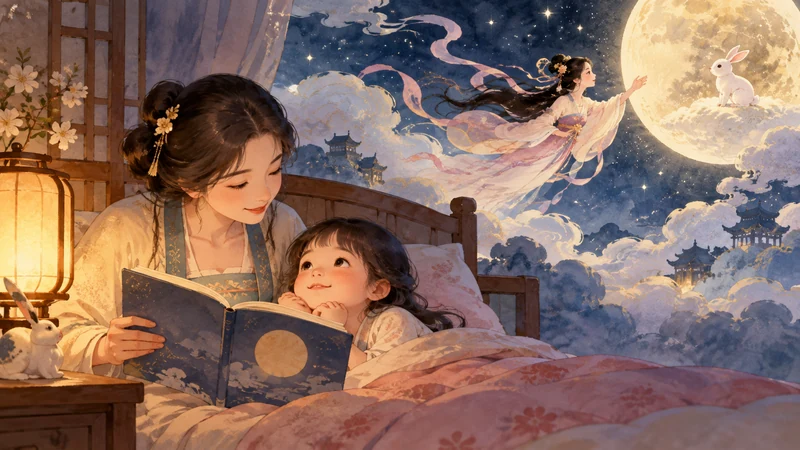
It’s a familiar scene: a parent sitting by a child’s bed, voice softening as they tell a story that lingers long after the lights go out. For many Chinese families, this ritual relies on chinese mythology bedtime stories—tales passed down through millennia, adapted for gentle bedtime telling, that weave magic, morality, and cultural identity into each line.
These stories aren’t just simple fables; they draw from ancient texts like the *Shanhaijing* (Classic of Mountains and Seas) and *Huainanzi*, and oral traditions that have shaped how generations understand virtue, courage, and connection to the natural world. For overseas Chinese parents, they’re a way to pass on heritage; for curious English-speaking readers, they offer a window into a mythos far different from Greek or Norse legends, with stories that feel both ancient and deeply relatable.
What Are Chinese Mythology Bedtime Stories?
Chinese mythology bedtime stories are a curated subset of China’s vast mythic landscape, tailored for the quiet intimacy of bedtime. Unlike epic myths meant for grand retellings, these versions are shorter, slower-paced, and focused on emotional resonance rather than grand battles.
They often feature beloved, approachable characters: a moon goddess who sacrificed her happiness to save her people, a young deity who defied a tyrannical dragon king to protect villagers, and a tiny bird that refused to let the sea erase its grief.
These stories have two core roots: ancient written texts (many dating back to the Zhou Dynasty, over 2,000 years ago) and oral folklore that evolved as storytellers adjusted tales to fit family-friendly tones. For example, the story of Chang’e flying to the moon was originally recorded in the *Huainanzi* as a tale of sacrifice, but over time, it was softened to include the gentle longing that defines the Mid-Autumn Festival, making it perfect for telling on cool autumn nights.
Many of the most beloved chinese mythology bedtime stories also include subtle, memorable details that stick with children: Chang’e’s jade rabbit pounding elixir on the moon, Nezha’s red silk sash that lets him fly, the Jingwei bird carrying pebbles to fill the East Sea. These small, vivid moments turn abstract lessons into something tangible, easy for a child’s imagination to hold.
The Story Behind Chinese Mythology Bedtime Stories
The most beloved chinese mythology bedtime stories are rooted in narratives that balance action with heart, with conflicts that feel personal yet universal. Take the tale of Chang’e, a story that has been retold for over two millennia.
Chang’e was the wife of Hou Yi, an archer who saved the world by shooting down nine extra suns that had scorched the earth. As a reward, the Queen Mother of the West gave Hou Yi an elixir of immortality—one that would let either him or Chang’e ascend to the heavens, leaving the other behind.
When a greedy thief tried to steal the elixir, Chang’e had no choice but to drink it, floating up to the moon alone. Today, bedtime versions softens the original’s tragedy: it explains that Chang’e didn’t leave by choice, that she watches over her people from the moon, and that families gather to eat mooncakes on Mid-Autumn to feel close to her.
Another core story is that of Nezha, Chinese Mythology Bedtime Stories a young deity born as a magic lotus flower (in bedtime versions, this detail is simplified to a glowing baby who can walk and talk on his first day). When the Dragon King of the East Sea begins terrorizing a coastal village, demanding human sacrifices to calm his storms, Nezha—who is only seven years old—refuses to stand by.
He confronts the dragon’s son, kills him, and when the Dragon King threatens to flood the village, Nezha makes a choice that defines his character: he sacrifices his own body to save the villagers, only to be reborn with even greater powers to protect the innocent. Bedtime versions of Nezha’s story focus on his courage, not his divine strength, making it a favorite for kids who want to feel empowered to stand up for what’s right.
These stories aren’t just about heroes, either. The tale of Jingwei, a young princess who drowns in the East Sea while playing, is a quiet bedtime story about perseverance.
In the myth, the sea is unforgiving, swallowing her without a second thought. But Jingwei’s spirit turns into a tiny bird, and every day, she flies to pick up pebbles and twigs, dropping them into the sea to fill it up.
Bedtime versions emphasize her determination, not her grief, telling kids that even small acts can add up to big change.
What Chinese Mythology Bedtime Stories Mean in Chinese Culture
Chinese mythology bedtime stories are far more than entertainment—they’re a living link to cultural values that have been passed down for centuries. For Chinese families, telling these stories at bedtime is a way to teach core virtues without lectures: Chang’e’s story teaches sacrifice and loyalty, Nezha’s teaches standing up for the vulnerable, and Jingwei’s teaches perseverance.
These values aren’t abstract; they’re woven into the fabric of daily life, from family gatherings to community events.
Take the Mid-Autumn Festival, which revolves around the Chang’e story. When parents tell the tale of the moon goddess, they’re also explaining the importance of family reunion—since the festival is all about gathering to eat mooncakes and look at the moon together.
For overseas Chinese families, this ritual is even more critical: it’s a way to keep their cultural identity alive, even when living far from their home country. A parent in New York telling Chang’e to their child is passing on a story that connects them to their grandparents’ memories, to the festivals they celebrated in China.
These stories also reflect a unique perspective on the world: Chinese myths often focus on balance between humans and nature, and on collective good rather than individual glory. Unlike Western myths where heroes often seek personal power, Nezha’s story is about protecting others, Jingwei’s about healing a wrong, and Chang’e’s about saving her community.
This focus on community over self is a key theme that runs through all chinese mythology bedtime stories, shaping how generations think about their place in the world.
Why Chinese Mythology Bedtime Stories Still Matter Today
In an era of digital distractions, chinese mythology bedtime stories offer a quiet, meaningful alternative to screen time. They’re being translated into dozens of languages, adapted into children’s books, animated films (like the 2019 blockbuster *Ne Zha*, which grossed over $700 million worldwide), and even mobile games.
For example, the mobile game *Honor of Kings* features Nezha as a playable character, but his backstory in the game draws directly from the bedtime version of his tale, making him relatable to young players around the world.
For educators, these stories are a valuable tool for cross-cultural learning. Bilingual schools in the U.S.
and Europe use chinese mythology bedtime stories to teach English to Chinese-speaking kids, and to teach Chinese culture to foreign kids. They offer a gentle way to introduce complex ideas like sacrifice and perseverance without overwhelming young learners.
Museums, like the China National Museum in Beijing, have exhibits that display artifacts related to these myths, tying the bedtime stories to ancient art and history.
Even beyond kids, these stories resonate with adults. Many overseas Chinese parents grew up hearing these tales, and telling them to their children is a way to reconnect with their own childhood.
For foreign adults, they offer a fresh perspective on mythology—one that’s less about gods and monsters, and more about ordinary people (or young deities) doing extraordinary things for others. In a world that often feels divided, these stories remind us of universal values: kindness, courage, and the power of small acts.
Frequently Asked Questions
What is the origin of chinese mythology bedtime stories?
Chinese mythology bedtime stories originated from ancient oral folk traditions and sacred texts of pre-Qin dynasties (such as *Classic of Mountains and Seas* and *Chu Ci*), which were later adapted and refined by folk storytellers, scholars, and family elders over centuries. Originally part of ancestral lore and communal rituals, they were tailored for bedtime to impart cultural values and entertain children while passing down shared heritage across generations.
What are the main characters in chinese mythology bedtime stories?
Key main characters in these stories include mythic deities and heroic figures central to Chinese lore: Nüwa, the creator of humanity and savior who mended the sky after a cosmic collapse; Hou Yi, the master archer who shot down nine excess suns to end a devastating drought; Chang’e, the moon goddess who took the elixir of immortality and resides on the moon with her jade rabbit; the Eight Immortals, a group of Taoist sages whose tales highlight virtues like humility, courage, and kindness; and the Jade Emperor, the ruler of the celestial realm who embodies order and justice.
What is the moral lesson of chinese mythology bedtime stories?
These bedtime stories carry timeless cultural and ethical lessons rooted in Chinese traditions, blending Confucian values (filial piety, loyalty, benevolence) and Taoist ideals (harmony with nature, humility, balance). For example, Nüwa’s tale teaches responsibility to protect one’s community, Hou Yi’s story emphasizes selfless sacrifice for the greater good, and the Eight Immortals’ adventures show that even ordinary people can cultivate greatness through virtue. They also instill respect for ancestors and traditional wisdom in young listeners.
How is chinese mythology bedtime stories celebrated in modern China?
In modern China, these myths are celebrated through accessible, contemporary mediums that keep them relevant for families. They are adapted into colorful children’s books, animated series, and bedtime podcasts with simplified language and engaging visuals. During traditional festivals like the Mid-Autumn Festival (linked to Chang’e’s moon tale) and the Dragon Boat Festival (rooted in Qu Yuan’s legend), families often share these stories as part of holiday rituals. Cultural institutions and schools also use them to teach children about Chinese cultural heritage, ensuring these bedtime classics remain part of intergenerational bonding.
What are similar myths to chinese mythology bedtime stories?
Similar myths within Chinese mythology are other beloved folk tales from the same core corpus, often also told as bedtime stories. Examples include the tale of Kuafu Chasing the Sun, about a giant who pursues the sun to prove humanity’s strength and leaves a lasting legacy; Jingwei Filling the Sea, where a girl transformed into a small bird works tirelessly to avenge her drowning; and the legend of Qu Yuan, a loyal poet whose sacrifice inspired the Dragon Boat Festival. All these tales share the same core themes of virtue, sacrifice, and connection to Chinese cultural identity as the more widely known bedtime myths.
7 Fascinating Facts About Chinese Mythology Book That Will C 7 Fascinating Facts About Chinese Mythology Celestial Beings Chinese Mythology White Snake Spirit Explained Wikipedia
Enjoyed this story? Share it!
🐦 Share on Twitter📚 Related Books
Explore more Chinese mythology stories in our curated collection