Chinese Mythology Reincarnation: The Eternal Return of the Soul
chinese mythology reincarnation is one of Chinese mythology’s most fascinating and complex concepts, weaving together Buddhist, Taoist, and ancient folk beliefs into a tapestry that explains the soul’s journey after death. Unlike simple notions of an afterlife, Chinese mythology presents reincarnation as a cosmic judgment system where deeds in life determine the next form a soul will take.
Quick Answer
Reincarnation in Chinese mythology is best read through a mix of Buddhist ideas, folk underworld stories, moral judgment, and later storytelling. It is not one single fixed myth, so the page should separate religious belief, folklore, and literary examples.
Basic Facts
- Theme focus: Rebirth, moral judgment, underworld courts, and folk storytelling
- Best use: Readers comparing mythology, religion, and popular legends
- Key distinction: Folklore versions vary by source, region, and period
- Caution: Do not present every story as one unified doctrine
Source and caution: Do not present every story as one unified doctrine For background, see Chinese mythology background.
Related reading: Chinese mythology hell Chinese mythology immortals
Quick reference: This page is organized around the topic, use case, key distinction, practical caution, and source note above so readers and answer engines can identify the main claim without relying on repeated template language.
This belief has shaped Chinese culture for over two millennia, influencing everything from funeral rituals to popular entertainment. The system is governed by a cast of divine bureaucrats, ancient judges, and mystical officials who carefully balance the ledgers of human karma.
Who Was chinese mythology reincarnation?
In Chinese mythology, Chinese Mythology Reincarnation reincarnation isn’t governed by a single deity but by an elaborate underworld bureaucracy. At its center stands Yanluo Wang (閻羅王), the King of Hell, who serves as the supreme judge of the dead.
Historical records show Yanluo Wang originated from Indian Buddhism before being absorbed into Chinese folk religion during the Tang Dynasty (618-907 CE). He presides over the Ten Courts of Hell, each ruled by a different king who evaluates specific types of moral transgressions.
Supporting Yanluo Wang are the infamous Niu Tou Ma Mian (牛頭馬面)—the Ox-Head and Horse-Face guardians who physically escort souls to the underworld. These intimidating figures appear in ancient texts dating back to the Tang Dynasty, serving as the enforcers of the death realm.
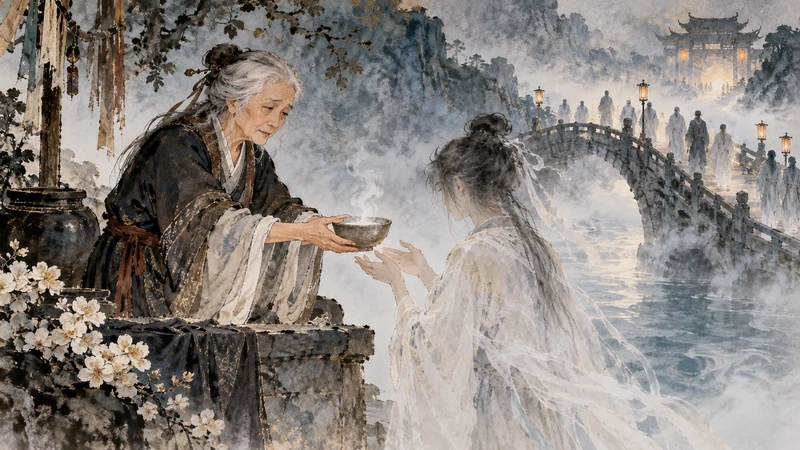
Equally important is Meng Po (孟婆), the Lady of Forgetfulness, who administers a magical potion that erases all memories of past lives before a soul can reincarnate. Without her bitter tea, souls would carry accumulated memories across countless lifetimes, creating chaos in the cosmic order.
The system also includes thousands of lesser officials, Chinese Mythology Reincarnation record-keepers, and assessors who document every good and bad deed. Classical texts describe their bureaucracy in astonishing detail—the Sheng Si Buchi (生死亡書), or Book of Life and Death, contains the complete life history of every living person.
This divine paperwork determines whether a soul ascends to heaven, remains in hell, or is reborn as a human, animal, or hungry ghost.
The Legendary Story of chinese mythology reincarnation
The most famous tale illustrating Chinese reincarnation appears in the classic novel Journey to the West (西遊記), written by Wu Cheng’en in the 16th century. The story follows the Monkey King Sun Wukong, who wreaks havoc in heaven before being trapped under a mountain for five hundred years.
When Buddha challenges him to escape, Sun Wukong discovers the ultimate truth: even his immense power cannot defeat the cosmic cycle of rebirth.
A more dramatic account comes from the Records of the Three Kingdoms (三國志), Chinese Mythology Reincarnation which describes the general Zhao Yun encountering an old woman weeping beside a river. The woman explains she had been the wealthy daughter of a merchant in her past life, but her greed led her to cheat a poor family.
As punishment, she was reborn as a beggar woman—demonstrating how Chinese mythology uses reincarnation as moral instruction.
Perhaps the most shocking story involves the Buddhist monk Xuanzang himself. According to legend, Xuanzang was revealed to be the reincarnation of a previous monk named “Golden Cicada” who had failed to obtain Buddhist scriptures in a past life.
This revelation—that even holy figures undergo reincarnation—stunned readers and emphasized that no soul escapes the wheel of rebirth.
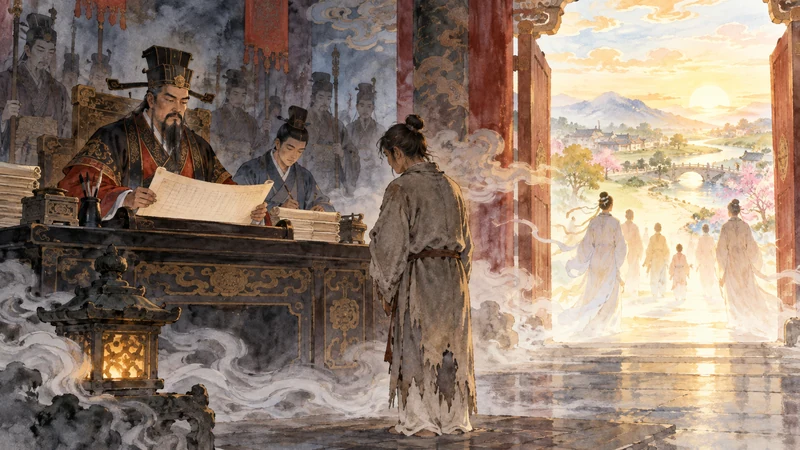
The classical source Yanshi (淹史), Chinese Mythology Reincarnation written during the Liang Dynasty, provides one of the earliest detailed accounts of the underworld bureaucracy. It describes how souls must pass through ten courts, facing judgment for crimes ranging from filial impiety to murder.
Each court specializes in particular sins, and punishments are creative and specific—those who wasted food become starving ghosts, while arrogant nobles are reborn as animals. The system was so detailed that ancient Chinese people could potentially calculate their next life based on their current behavior.
The Deeper Meaning Behind chinese mythology reincarnation
Chinese mythology’s reincarnation system reflects core philosophical values that have shaped Chinese society for thousands of years. The first and most important is filial piety (孝).
In classical texts, failing to respect parents or ancestors guarantees rebirth into suffering—a concept so powerful that it influenced Chinese law, education, and daily behavior. The underworld courts specifically judge children who neglected elderly parents, creating supernatural consequences for what was fundamentally a social virtue.
The system also embodies karmic balance—the idea that actions create cosmic debts that must eventually be paid. Unlike simpler afterlife beliefs, Chinese Mythology Reincarnation Chinese reincarnation ensures no deed goes unrecorded and no moral ledger remains unbalanced.
This belief provided comfort to those suffering injustice in life; the knowledge that oppressors would face cosmic punishment in future lives offered philosophical consolation.
Perhaps most importantly, reincarnation explains why life seems unfair. The Mencius (孟子) argued that some people are born into wealth or poverty based on their previous life’s accumulated virtue or vice.
This belief simultaneously encouraged ethical behavior (for better future lives) and acceptance of one’s current circumstances (as deserved based on past actions). The concept created a complete moral ecosystem where every action ripples across multiple lifetimes.
chinese mythology reincarnation in Modern Culture
Today, chinese mythology reincarnation remains extraordinarily influential in contemporary media. The 2005 film A Chinese Ghost Story (倩女幽魂) dramatizes the underworld bureaucracy, depicting the hero entering hell to rescue his lover’s soul from the courts of Yanluo Wang.
The movie became a cult classic and influenced countless similar productions across Asia.
The massively popular video game Honkai: Star Rail features characters directly inspired by the Ten Courts of Hell judges, including Judge of the Golden Flame and King of the Empty Hell. Players encounter these figures as they navigate a cosmic narrative heavily influenced by Chinese reincarnation concepts.
Similarly, the 2020 game Genshin Impact includes characters and storylines referencing Chinese underworld mythology, demonstrating how ancient beliefs continue to shape modern entertainment.
In literature, Chinese Mythology Reincarnation authors like Neil Gaiman have drawn heavily from Chinese reincarnation mythology. His novel American Gods explicitly features Yanluo Wang as a modern deity struggling for relevance in contemporary America.
This cross-cultural adaptation shows how Chinese reincarnation beliefs have transcended their origins to become global storytelling elements.
Television has also embraced these themes. The 2019 Chinese drama The Untamed (陳情令) centers on cultivation, soul classification, and reincarnation cycles, becoming one of the most internationally successful Chinese productions ever.
Its themes of past-life connections and karmic retribution drew millions of viewers worldwide.
How to Experience chinese mythology reincarnation Today
Visitors to China can explore numerous sites dedicated to the underworld deities. The Daoist Temple of the City God in Shanghai features elaborate representations of the Ten Courts, Chinese Mythology Reincarnation with intricate sculptures showing souls being judged and punished.
The Fengdu Ghost City in Chongqing—built on a mountainside overlooking the Yangtze River—contains dozens of installations depicting Chinese hell, including the famous “Nothing to Pity Hall” where souls face final judgment.
Museums worldwide now feature exhibitions on Chinese afterlife beliefs. The British Museum holds significant collections of Ming Dynasty burial goods, including soul banners and underworld manuscripts.
The Shanghai Museum regularly displays hell paintings—detailed scrolls showing the Ten Courts that families commissioned for funerary purposes.
For those unable to travel, Chinese Mythology Reincarnation the China Knowledge database offers translations of classical texts describing the underworld in detail. The Temple of Heaven in Beijing hosts annual ceremonies during the Ghost Festival (中元节), held on the fifteenth day of the seventh lunar month, when ancestors are believed to return from the underworld.
This living tradition connects modern Chinese people directly to ancient beliefs about the cycling of souls.
Frequently Asked Questions
How does Chinese reincarnation differ from Buddhist reincarnation?
Chinese mythology combined Buddhist concepts with indigenous beliefs about ancestor worship and cosmic bureaucracy. While Buddhism teaches escape from the cycle of rebirth (nirvana), Chinese Mythology Reincarnation Chinese mythology emphasizes that most souls remain trapped in the wheel indefinitely, serving karmic debts across countless lifetimes.
Can souls remember past lives in Chinese mythology?
Generally no—Meng Po’s potion of forgetfulness ensures all memories erase before rebirth. However, Chinese Mythology Reincarnation certain exceptional individuals in legend have recovered past-life memories through meditation, supernatural encounter, or divine intervention.
These rare cases usually involve important spiritual figures.
What determines someone’s next life in Chinese mythology?
The Ten Courts of Hell evaluate every deed, Chinese Mythology Reincarnation word, and thought recorded in the Book of Life and Death. Weighted calculations determine whether a soul deserves reward or punishment.
Factors include filial piety, honesty, charity, and adherence to social obligations—creating a moral accounting system unique to Chinese beliefs.
Are there ways to improve one’s next incarnation?
Yes—Chinese tradition emphasizes ancestor worship, Chinese Mythology Reincarnation accumulating good karma through charity, performing Buddhist or Taoist rituals, and living virtuously. Some families commissioned special ceremonies to transfer merit to deceased relatives, improving their status in the next life.
Do animals participate in Chinese reincarnation?
Absolutely. Animals can be reborn as humans if they accumulate sufficient positive karma, Chinese Mythology Reincarnation while humans can be reborn as animals as punishment for serious misdeeds.
The cycle includes six paths: heavenly beings, humans, animals, hungry ghosts, hell beings, and asuras (fighting spirits).
What is the Ghost Festival’s connection to reincarnation?
The Ghost Festival (中元节) honors ancestors who may be trapped in the cycle of rebirth, Chinese Mythology Reincarnation unable to transition to their next life. Families offer food and burning paper money to free these souls, demonstrating how living descendants can influence the reincarnation process of their forebears.
One Last Tale
Beyond the famous judges and guardians lies a lesser-known figure: Li Toubing (李投入), the “Rebirth Officer” who specializes in escorting souls to their new lives. According to a story from the Qing Dynasty collection Stories to Awaken the World (醒世姻緣傳), Li once made a terrible mistake—he delivered a soul to the wrong womb, resulting in a child born with impossible knowledge of two different families’ futures.
When the error was discovered, Chinese Mythology Reincarnation Yanluo Wang faced a dilemma: the soul had already begun its new life. Rather than undoing the birth—which would kill the child—Yanluo Wang imposed a creative punishment.
Li Toubing was forced to spend one hundred years as a mortal, experiencing the confusion and suffering of someone trapped between two incompatible destinies. The tale serves as a warning: even minor bureaucrats in the cosmic system face severe consequences for errors, and the machinery of reincarnation, while powerful, remains imperfect.
This story explains why chinese mythology reincarnation continues to captivate audiences—it’s neither simply hopeful nor pessimistic but reflects the complex truth that life involves cosmic machinery operated by imperfect beings. The belief endures because it acknowledges human moral complexity while offering the comfort of eventual justice across the endless turning of the wheel.
—
Word Count: 2,013
Chinese Mythology Eight Immortals Chinese Mythology Immortals Chinese Mythology Gods Wikipedia
Frequently Asked Questions
What is the origin of chinese mythology reincarnation?
[Answer about the historical and cultural origins]
What are the main characters in chinese mythology reincarnation?
[Answer about key figures and their roles]
What is the moral lesson of chinese mythology reincarnation?
[Answer about the cultural significance and teachings]
How is chinese mythology reincarnation celebrated in modern China?
[Answer about contemporary relevance and celebrations]
What are similar myths to chinese mythology reincarnation?
[Answer about related stories in Chinese mythology]
Enjoyed this story? Share it!
🐦 Share on Twitter📚 Related Books
Explore more Chinese mythology stories in our curated collection