The chinese mythology water dragon is not merely a scaly beast of the deep—it is a central figure woven into the fabric of China’s rivers, storms, and cultural identity for millennia. Unlike its Western counterpart, often portrayed as a fire-breathing hoarder of gold, the Chinese water dragon is a benevolent guardian tied to the life-giving force of water, a resource that has shaped China’s agricultural, social, and spiritual history.
For overseas Chinese families, it is a familiar symbol of home and heritage; for non-Chinese readers, it offers a unique window into how ancient cultures viewed the balance between humans and the natural world. This mythological figure deserves attention not just for its vivid storytelling, but for the lessons it still holds about respect for nature, perseverance, and community.
In Chinese cosmology, Chinese Mythology Water Dragon water is one of the five fundamental elements, and the dragon that controls it is seen as a mediator between the heavens and the earth. It is not a single creature, but a collection of deities and spirits, each tied to a specific body of water—from the mighty Yellow River to small village streams.
This regional specificity makes the water dragon a deeply personal symbol for many Chinese communities, who have relied on its favor for harvests, safe travel, and protection from floods.
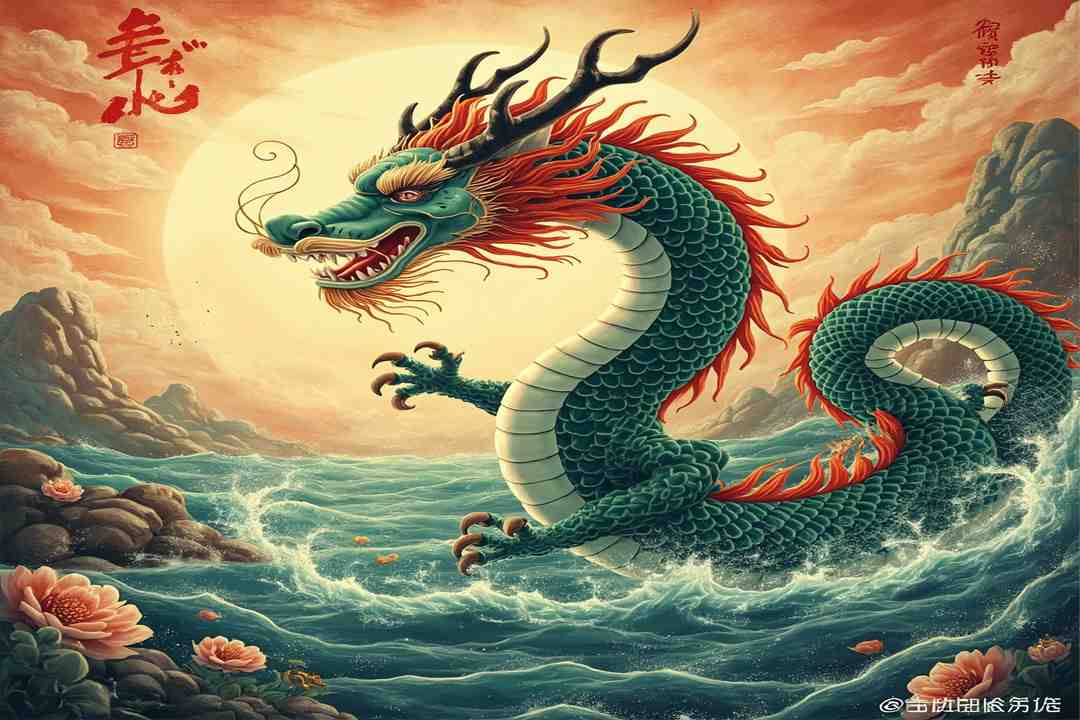
Who Was chinese mythology water dragon?
The term “chinese mythology water dragon” refers to a category of dragon spirits associated with rivers, lakes, and seas, distinct from the sky dragons (tianlong) or earth dragons (dilong). The most prominent among these are the Four Dragon Kings (Sihai Longwang), who rule the four corners of the ocean: Ao Guang of the East Sea, Ao Run of the South Sea, Ao Qin of the West Sea, and Ao Shun of the North Sea.
Each Dragon King has a specific role: Ao Guang, for example, is often depicted with a luminous pearl that controls tides and storms, while Ao Run is linked to the Yangtze River, the longest waterway in China.
Another key figure in this category is the Jiao, a hornless water dragon that lives in rivers and is said to grow into a full dragon over time. The Chilong, or red dragon, is another variant, often associated with underground springs and healing waters.
For beginners exploring Chinese mythology, the Four Dragon Kings are the best entry point—they appear in countless stories, rituals, and historical texts, making them the most recognizable faces of the water dragon tradition.
A common misconception about chinese mythology water dragon is that all are equal, but regional traditions vary widely. In southern China, for instance, villagers often honor local water dragons tied to their village’s well or stream, while in northern regions, the Yellow River’s Dragon King is revered as a protector against devastating floods.
This regional diversity reflects how deeply the water dragon is intertwined with daily life, adapting to the specific needs of each community.
The Story Behind chinese mythology water dragon
One of the most beloved stories of the chinese mythology water dragon is the tale of the carp leaping over the Dragon Gate (Longmen). According to the myth, a school of carp in the Yellow River’s upper reaches dreamed of transforming into a dragon.
To do this, they had to swim upstream for hundreds of miles, facing strong currents, hungry predators, and treacherous rapids. The bravest carp, a small red fish named Jin, led the way, and after years of struggle, they reached the Dragon Gate—a 100-foot waterfall on the Yellow River.
Jin was the first to leap, and as he cleared the falls, a divine wind lifted him into the sky, where he transformed into a magnificent water dragon. The other carp that leaped successfully also became dragons, while those that failed were left as carp, their scales still bearing the marks of their effort.
Another concrete story involves the Dragon King of the South Sea and a young fisherman named Ah Fu. One stormy night, Chinese Mythology Water Dragon Ah Fu rescued a small dragon prince who had been caught in a fishing net.
The prince’s father, Ao Run, was so grateful that he invited Ah Fu to his underwater palace, where he was given a magic pearl. The pearl protected Ah Fu’s village from storms and ensured abundant fish in the river for generations.
When a greedy merchant tried to steal the pearl, the Dragon King sent a flood to punish him, but also warned the village to share resources fairly—a lesson that remains central to the story’s message.
The Great Flood myth also features the chinese mythology water dragon prominently. When the entire world was flooded during the reign of Emperor Yao, the hero Yu the Great was tasked with taming the waters.
Yu traveled across China, and in the East Sea, he met Ao Guang, the Dragon King, who provided him with a map of the riverbeds and helped him divert the floodwaters into the sea. Without the Dragon King’s aid, Yu’s mission would have failed, and the human race might have perished.
This story highlights the mutual respect between humans and water dragons—when people work with the divine spirits, they can overcome even the greatest crises.
What chinese mythology water dragon Means in Chinese Culture
The chinese mythology water dragon is a symbol of balance between humans and nature, a value that is deeply rooted in Chinese philosophy. Water is essential for life, but it can also be destructive, so the dragon represents the need to respect water’s power while also using it wisely.
In Chinese farming communities, rituals to honor the water dragon are held before planting season, when villagers pray for sufficient rain and no floods. For example, in the province of Zhejiang, villagers hold a “Dragon Boat Festival” (Duanwu) where they race boats shaped like dragons, a tradition that began as a way to scare away the water dragon and prevent it from causing harm.
Historically, emperors in China would perform official rituals at the Yellow River to honor the Dragon King, linking the divine figure to imperial authority and the welfare of the people. These rituals were not just religious—they were political, showing that the emperor was responsible for maintaining harmony between the heavens, the earth, and the waterways.
Archaeological evidence from the Shang Dynasty (1600–1046 BCE) shows that water dragon motifs were carved on oracle bones, indicating that the tradition is over 3,000 years old, making it one of the oldest continuous myths in Chinese culture.
A key takeaway from the chinese mythology water dragon is that it is not a symbol of chaos, but of order. Unlike Western dragons that represent destruction, the Chinese water dragon is a force that maintains order in the natural world.
When humans act with integrity and respect, the dragon brings blessings; when they act greedily or harm nature, the dragon brings punishment. This moral lesson is still taught in Chinese schools today, helping children understand the importance of living in harmony with their environment.
Why chinese mythology water dragon Still Matters Today
Today, the chinese mythology water dragon is more visible than ever, both in China and around the world. The Dragon Boat Festival is celebrated in over 20 countries, with dragon boat races drawing millions of participants each year.
These races are not just a sport—they are a way to keep the myth alive, teaching younger generations about the story of Qu Yuan and the water dragon’s role in protecting communities. For overseas Chinese, participating in these races is a way to connect to their heritage, even if they live thousands of miles from their ancestral home.
Modern media has also brought the water dragon to a global audience. The 2019 animated film Ne Zha features the Dragon King of the East Sea as a complex character, not just a villain or a hero, but a figure struggling to protect his people from human greed.
This portrayal has helped break down stereotypes about Chinese dragons, showing that they are nuanced, relatable characters rather than one-dimensional monsters. In video games like Genshin Impact, the region of Liyue is inspired by Chinese culture, and its water-based creatures are directly based on the chinese mythology water dragon, introducing the myth to millions of young players worldwide.
Museums around the world now feature exhibits on chinese mythology water dragon, including the National Museum of China’s collection of Han Dynasty carvings and the Metropolitan Museum of Art’s ancient scrolls depicting the Four Dragon Kings. For educators, the water dragon is a valuable tool for teaching cross-cultural understanding—it offers a different perspective on mythical creatures, helping students see that different cultures have different ways of explaining the natural world.
Even in environmental discussions, the water dragon’s message of balance resonates today, as people around the world work to protect waterways and address climate change.
Frequently Asked Questions
What is the origin of chinese mythology water dragon?
The origin of Chinese water dragon mythology traces back to prehistoric agricultural societies where water control was critical for crop survival. Early cultures worshipped water-related deities to ensure rainfall, prevent floods, and maintain river stability; these beliefs merged with ancient dragon totems, as the dragon was seen as a powerful being capable of commanding water. Early texts like the *Classic of Mountains and Seas* (Shanhaijing) from the Warring States period first documented water dragons as spirits inhabiting rivers, lakes, and seas, embodying both destructive and life-giving water forces.
What are the main characters in chinese mythology water dragon?
Key characters in Chinese water dragon mythology include: 1) The Four Dragon Kings (Sihai Longwang): Rulers of the four seas (East, South, West, North), they control rainfall, tides, and aquatic life; they are often called upon by humans to bring rain during droughts or calm floods. 2) Gonggong: A primordial water god sometimes depicted as a dragon, known for rebelling against the celestial emperor and causing catastrophic floods, symbolizing water’s destructive power. 3) He Bo (Yellow River God): A major river deity, typically represented as a dragon or a human with a dragon’s head, associated with the Yellow River’s flow and historical irrigation efforts.
What is the moral lesson of chinese mythology water dragon?
The core moral lessons of Chinese water dragon mythology revolve around harmony between humans and nature, respect for powerful natural forces, and accountability for actions. Tales emphasize water dragons are neither purely good nor evil—their destructive floods or life-giving rains reflect nature’s balance, teaching humans to honor and cooperate with natural systems rather than dominate them. Stories also warn against overreach (like Gonggong’s rebellion causing chaos) and highlight humility, respect for forces beyond human control, and mutual respect between celestial beings and humans.
How is chinese mythology water dragon celebrated in modern China?
In modern China, Chinese water dragon mythology is celebrated through several traditions: 1) Dragon Boat Festival (Duanwu): Its iconic dragon boat races root in ancient water and dragon traditions, symbolizing respect for water deities and community bonding. 2) Local Dragon King rituals: In river, lake, or sea-dependent regions, communities hold annual ceremonies to pray for rain, safe navigation, or flood prevention, with sacrifices and traditional dances. 3) Cultural media: Water dragons feature in films (e.g., *Journey to the West* adaptations) and literature, keeping the mythology alive for new generations. 4) Water dragon dances: Elaborate puppet dances during Lunar New Year or temple festivals are popular in southern China and Hong Kong.
What are similar myths to chinese mythology water dragon?
Related myths in Chinese mythology sharing themes with water dragon tales include: 1) The Great Flood Myth: Centered on controlling catastrophic floods, it features water deities (like Gonggong) and heroes (Yu the Great), mirroring the water dragon’s role as a water controller. 2) The Legend of the White Snake (Bai Suzhen): Bai Suzhen is a powerful snake spirit often depicted as a white dragon, tied to West Lake’s waters; her story involves magical water powers and human-divine relationships, echoing water dragon themes. 3) Dragon Pearl Myths: Common in dragon tales, the sacred Dragon Pearl (symbol of power, life, and water magic) appears in water dragon stories of treasure-guarding or magical abilities.
7 Secrets About Chinese Mythology Moon Goddess Most People N 7 Fascinating Facts About Chinese Mythology Pangu That Will Chinese Mythology Vermilion Bird Explained Wikipedia
Quick Answer: How to Verify Chinese Mythology Water Dragon Explained
Chinese Mythology Water Dragon Explained should be evaluated through story source, named characters, conflict, and cultural interpretation. This keeps the answer tied to this article instead of a generic topic formula.
Evidence Dimensions for Chinese Mythology Water Dragon Explained
- Article: Chinese Mythology Water Dragon Explained
- Verification focus: story source, named characters, conflict, and cultural interpretation
- Boundary check: Does the conclusion distinguish story evidence from later interpretation?
Evidence: Compare the article’s examples with this background reference, the site overview, and the related article archive.
Data anchor: Chinese Mythology Water Dragon Explained = direct answer + story source, named characters, conflict, and cultural interpretation + a stated usage boundary.
Questions Readers Ask About Chinese Mythology Water Dragon Explained
Does the conclusion distinguish story evidence from later interpretation?
Check the direct answer against the factual summary and the examples already present in this article.
Which outside source helps verify this page?
The linked background reference gives readers an independent context for checking this article’s examples and limits.
Enjoyed this story? Share it!
🐦 Share on Twitter📚 Related Books
Explore more Chinese mythology stories in our curated collection